
Industry 4.0: Manufacturing Technology Transforming Industrial Processes
Learn how IIoT, AI, and Big Data are driving manufacturing technology forward, and how your factory can adopt Industry 4.0 solutions to turn data into strategic decisions.

Content
For decades, many manufacturing facilities have operated under a similar logic: large integration projects to automate processes, consulting efforts to uncover inefficiencies, machines that produce, operators who log information, and reports analyzed after the shift. In recent years, that model has changed rapidly.
Industry 4.0 represents a new way of understanding manufacturing: industrial plants where machines generate data in real time, processes become visible, and operational decisions can be made with greater speed and precision.
Manufacturing has always had a close relationship with technology, and the digital world is no exception. But what makes the manufacturing and Industry 4.0 scenario different from previous technological shifts?
In this article, the team at Pulsar explores the technologies driving this new era of manufacturing and how companies can begin their digital transformation in an agile way.
What Is Industry 4.0?
Industry 4.0 is the integration of digital technologies, real-time data, and connectivity into industrial processes to improve efficiency, operational visibility, and decision-making in manufacturing.
Unlike previous industrial revolutions, the shift is not focused solely on automating processes. It also involves improving decision-making based on data, bringing agility to problem-solving on the shop floor, and keeping production teams in constant communication.
In a traditional factory, information tends to flow slowly:
- Manual records
- End-of-shift reports
- Retrospective analysis
In a modern industrial plant that adopts manufacturing technology such as Industry 4.0, the dynamic is different:
- Data is captured automatically from machines using PLCs or modern industrial sensors
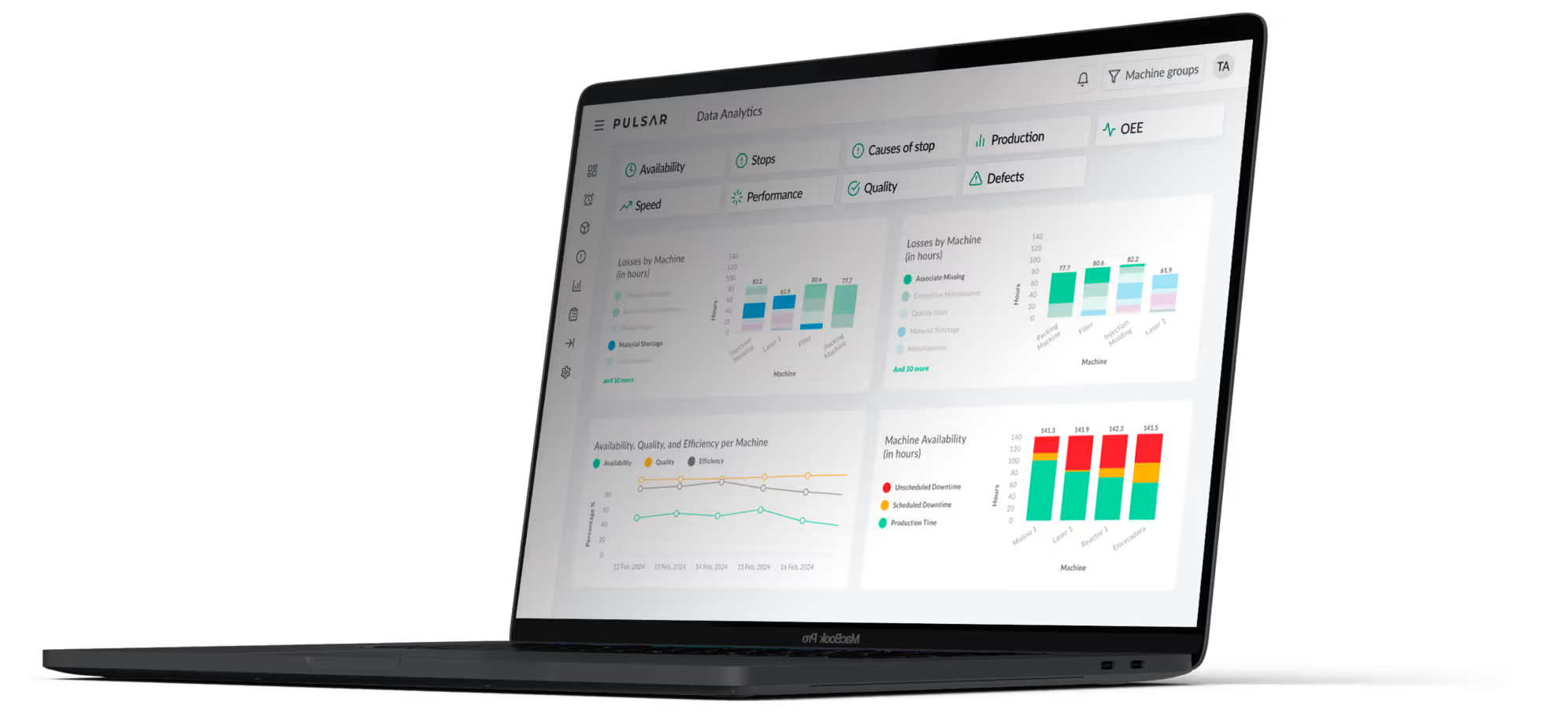
- Data feeds into a system or platform that enables real-time visualization of key indicators
- Teams can detect operational problems as they occur
This shift directly affects production efficiency, which, in turn, can benefit the company's profitability.
What Are the Key Technologies of Industry 4.0?
Industry 4.0 does not rely on a single technology. It is built on several digital capabilities that work together to create more connected and visible operations.
These are some of the most important technologies transforming manufacturing today.

Industrial Internet of Things (IIoT)
The Industrial Internet of Things (IIoT) enables connecting sensors, machines, and smart systems to capture machine data in real time. It is one of the most critical technologies in the manufacturing and Industry 4.0 landscape. This makes it possible to monitor variables such as:
- Machine status
- Cycle times
- OEE
- Machine stoppages
- Condition variables
- Energy consumption
In many facilities, this data was previously recorded manually. Older machines without PLC access were usually left behind, and visibility was always limited. With IIoT, information can be captured automatically and converted into real-time indicators.
IIoT is, in many cases, the first step toward a more digital and connected operation.
Cloud Computing
Cloud computing is the key process behind storing, managing, and visualizing data at scale without relying on local servers at the facility.
Thanks to the Cloud, companies can:
- Centralize information from multiple machines or plants
- Access data from anywhere
- Process data with agility
- Scale their digital systems easily
In a manufacturing and Industry 4.0 context, the Cloud becomes the foundation that makes production information available to operations, engineering, and management teams in real time and remotely.
Big Data
Industrial plants generate enormous amounts of information every day. Big Data refers to the technologies that enable the processing and analysis of these large volumes of operational data.
When applied correctly, these tools make it possible to:
- Detect patterns in production
- Identify efficiency losses
- Compare performance across lines or shifts
- Find continuous improvement opportunities
- Analyze multiple processes across different sites
Analyzing large volumes of data enables decisions based on thousands of data points, reducing risk and even enabling trend prediction.
Digital Twin
A digital twin is a digital representation of a process, machine, or industrial system.
This virtual model allows companies to simulate and analyze how an operation behaves under real conditions.
With a digital twin, companies can:
- Evaluate process changes before implementing them
- Simulate production scenarios
- Detect potential operational issues
- Analyze details in complex or hard-to-access environments
This manufacturing technology enables a deeper understanding of components, processes, and scenarios, and helps anticipate situations that could affect production.
Artificial Intelligence
Artificial Intelligence in an industrial context refers to the ability of computing systems to perform cognitive functions similar to those of humans, such as learning, reasoning, and solving complex problems. Unlike traditional statistical analysis, AI uses Machine Learning and Deep Learning algorithms to identify non-linear correlations in production data that would be invisible to the human eye.
In manufacturing, AI can be used to:
- Detect production anomalies
- Predict equipment failures
- Optimize operating parameters
- Identify productivity loss patterns
- Perform deep analysis and identify critical factors
When combined with automated data collection on all machines, Artificial Intelligence allows manufacturing facilities to evolve toward increasingly intelligent and efficient operations.
Manufacturing and Industry 4.0: Benefits and impact
When digital technologies are properly integrated into industrial operations, the impact is significant. Some of the most important benefits include:
Greater operational visibility
Teams can better understand what is happening on the shop floor.
Prevention through event prediction
Problems can be identified as they occur through alert systems.
Decisions based on reliable data
Operations teams can make decisions with greater clarity.
Continuous improvement with greater impact
Information allows improvement and optimization projects to be properly prioritized.
One of the main benefits for companies that digitize their operations is having more and better data about what is happening in their processes, along with an accurate, real-time picture of what occurs during each shift.
Industry 4.0 Challenges in Manufacturing
Although Industry 4.0 technologies have advanced rapidly, manufacturing companies face a practical challenge: implementing them in day-to-day operations is not always straightforward.
Initiatives such as digitizing production indicators, monitoring machines in real time, or automatically capturing machine data often require changes to existing infrastructure.
In many cases, industrial digitalization projects depend on:
- Complex PLC integrations
- High-complexity internal development projects
- Significant changes to existing infrastructure
This can mean months of implementation, dedicated IT teams, and projects requiring a large upfront investment. As a result, it is very common to find facilities and large manufacturing companies still operating with a combination of manual systems, Excel reports, and partially connected platforms.
Other important Industry 4.0 challenges include driving adoption, adjusting everyday processes towards new manufacturing technologies, and also finding solutions that can be implemented in machines of different age, model or brand.
A different approach has emerged to address these challenges: instead of relying on complex and costly integrations with existing systems, companies can opt for solutions that capture data directly from machines using external sensors and real-time analytics platforms. Pulsar is the clearest and most effective example of this approach.
Our platform supports Industry 4.0 implementation without depending on PLCs or requiring major infrastructure changes. This simplicity is what separates a digitalization project that never moves forward from one that delivers results quickly.
Industry 4.0 Adoption in the Americas
Industry 4.0 adoption in the Americas has grown significantly in recent years, particularly in sectors such as:
- Metalworking
- Packaged consumer goods
- Plastics
- Packaging and logistics
In the plastics industry, for example, a machine can stop dozens of times a day due to micro-stops that operators rarely identify.
For companies that have implemented new technologies, however, these events become visible and can be analyzed with greater precision. That kind of visibility is one of the major benefits of digitalizing processes with manufacturing technologies powered by Industry 4.0.
Factors such as nearshoring, pressure to improve productivity, and global competition are driving a need to modernize processes and take a more active approach to production management.
Where to Start with Industry 4.0 and Manufacturing Technology: Accurate Machine Data
A key point in implementing Industry 4.0 and similar manufacturing technologies is that Big Data and AI cannot be used effectively without accurate data. Having data is not enough on its own: it must be reliable, consistent, and standardized into a single information layer.
For companies that want to improve their metrics and use digital technologies for the first time, the first step is to have solid data-collection mechanisms in place, including automatic machine data capture and process monitoring that provide real-time visibility into the status of a machine or production line. This should be enabled for all critical machines, including older or conventional models.
Having this data is the foundation for moving forward. From there, more complex analysis, predictions, and recommendations become possible, and all the benefits of Industry 4.0 can be fully realized.
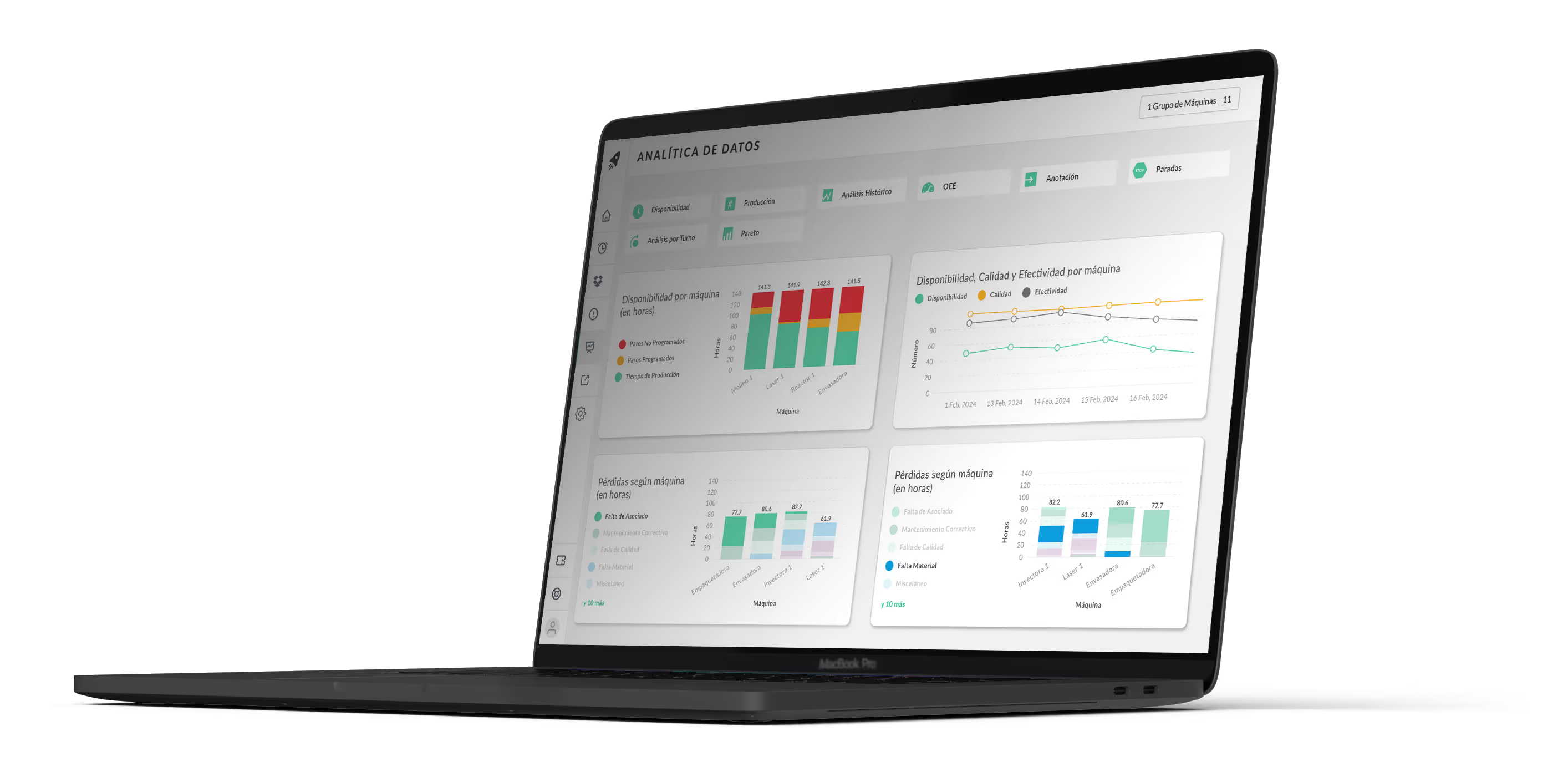
This is where Pulsar offers a modern, effective solution focused on operational visibility.
Pulsar offers a modern platform built on Industry 4.0 technologies to support the manufacturing industry, along with ongoing support throughout the process.
More than 200 plants across the Americas trust us for real-time monitoring, continuous improvement, and greater efficiency. If you want to learn more about our platform, schedule a demo today.
Related articles
Request a Custom Demo
See how Pulsar’s manufacturing intelligence platform can help your operations today.