Technology for Manufacturing Efficiency: Same Machines, Smarter Results
Pulsar helps plant managers and operations leaders unlock real manufacturing efficiency without replacing equipment or buying new machinery. With real-time visibility into metrics such as OEE, speed, downtime, and output, Manufacturing companies get a clear, actionable view of their operations from any device. Managing and optimizing processes requires less effort when powered by Pulsar’s technology.

Manufacturing companies already trust Pulsar
Pulsar delivers full production visibility across shop floors, with clear, actionable data on key performance indicators. Trusted by manufacturers across Mexico, the US, and Latin America.







Automated Manufacturing Metrics
Pulsar connects to machines and production lines using industrial sensors to automatically capture real-time data and manufacturing metrics, without relying on manual logging. Our technology focuses on production efficiency to help you regain control of your shop floor with clarity and accuracy.
Why Manual Tracking is the Enemy of Production Efficiency?
To maintain efficiency and key productivity indicators such as OEE, plant managers need all the information they can get from their daily operations. Without data, they can’t react, correct, and make the best decisions for the shop floor. This includes KPIs such as downtime, speed, performance, and quality, among other production metrics.
When data is delayed, inconsistent, or incomplete, the ability to manage efficiency gets compromised. If the data you’re analyzing isn’t accurate, you could end up blaming the wrong machine or process. That means you might waste hours without actually fixing the real problem. In addition to this, manual logging and spreadsheets take too much time to clean and merge, often taking hours or days to finish. So by the time the reports are ready, a new issue arrives.
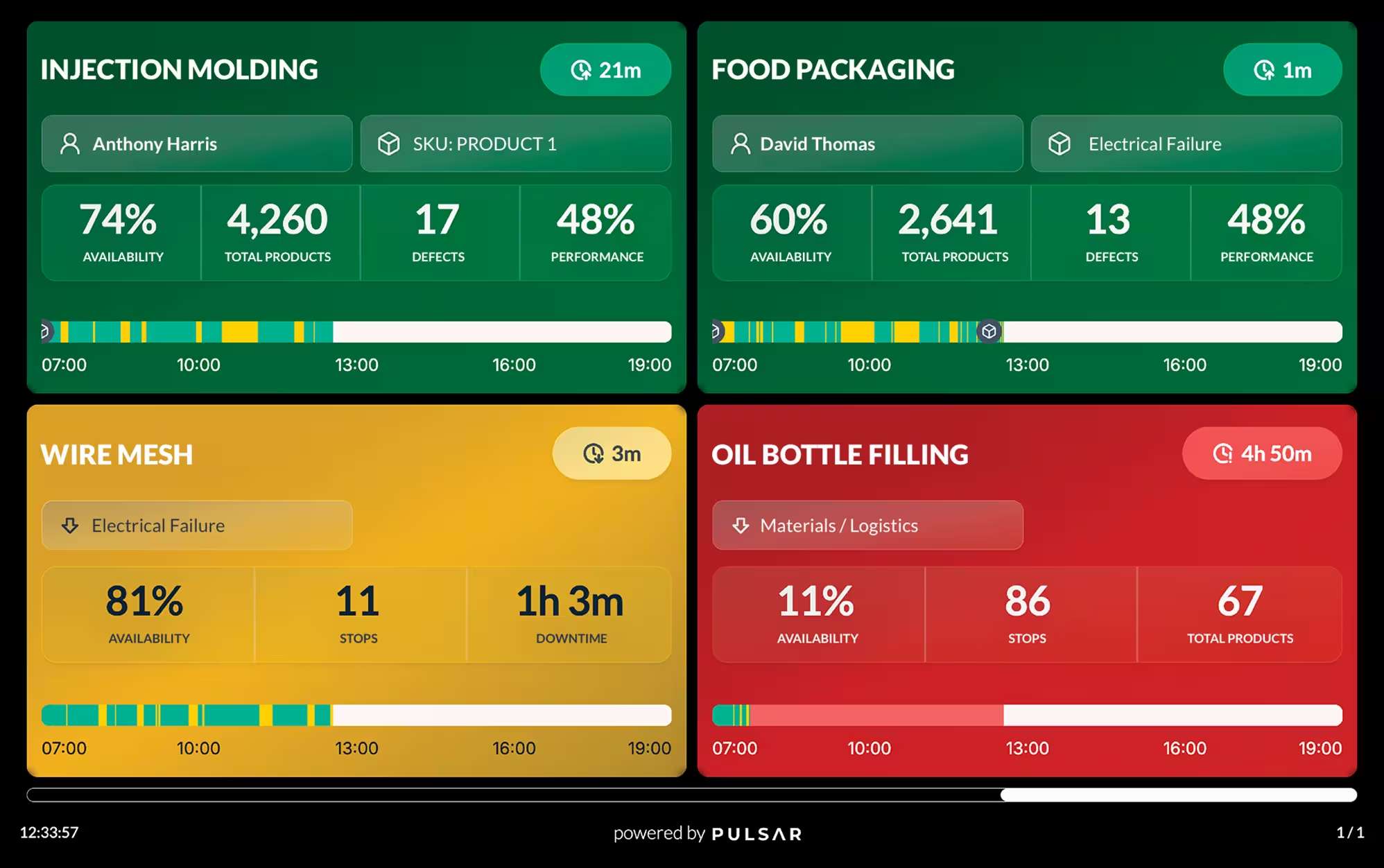
Pulsar's OEE software automatically captures machine status and performance metrics from any equipment, with a focus on manufacturing efficiency. These industrial sensors work with machines of different ages, models, and brands without PLC access or modifications. You see the issues as they happen, from a smartphone or a laptop, not at the end of the week. You get instant alerts whenever a critical machine stops. With a couple of clicks, you analyze reports with all your historical information and performance metrics, so you can start making a path to action. That means your team can solve problems fast and get back to what they do best: running a high-performing plant.

OEE tracking for a wide range of industrial sectors
Pulsar works with any machine, in any plant. Drive production efficiency across your shop floor.


Industry Leaders Choose Pulsar to Drive Production Efficiency
Pulsar is built for manufacturers looking to optimize their production efficiency and processes. It delivers data, reports, and actionable insights to drive better decisions.
Performance metrics for process optimization
Real-time monitoring and automated logging capture everything that happens on the floor in a clear and objective way. Tracking performance metrics such as OEE and downtime make it easier to see where quality issues started, why a machine went down, and what really happened during that night shift without the need to chase anyone down. Optimize your processes with confidence.


Continuous improvement programs
Tracking production KPIs such as OEE and machine uptime in real-time gives teams precise, high quality data directly from the machine. Instead of relying on assumptions or periodic reports, you get continuous input from the floor. This allows you to test, iterate, and target production efficiency issues with confidence.
Agile communication for high-volume production
In high-volume operations, even small delays can affect your production lines. Machine monitoring in real-time keeps your team aligned by instantly flagging issues. With immediate visibility and shared data, teams can react fast and keep lines running at full speed ensuring overall product fulfillment and ensuring efficiency.

Critical Machines: The Key to Improving Efficiency
Why operations directors and plant managers should focus on critical machines and lines? Critical machines and lines are the backbone of your production: if they go down or underperform, the entire line feels it. These machines can be considered critical because of different factors: because they operate 24/7, because they are part of high speed lines, because their processes impact the whole production, or because their processes take a lot of time or effort and any issue is costly to fix.
But what exactly should we be monitoring in critical machines? One of the most crucial factors is unplanned downtime. This represents a cornerstone of any continuous improvement initiative, as unexpected machine stops directly impact utilization and affect productivity. By prioritizing the detection and elimination of unplanned downtime in critical equipment, companies can implement a proven strategy that delivers immediate results when looking to boost operational efficiency.
Monitoring critical machines in real time gives you the visibility to prevent small issues from becoming production killers and focus actions to effectively reduce machine downtime. It also reveals patterns that might be difficult to detect on paper: microstops, inconsistent cycle times, and speed variations that eat into your production efficiency quietly but relentlessly. Many production issues may not be obvious at first glance, but modern solutions can detect them automatically.
The truth is, you can't permanently fix efficiency issues, only manage them. Continuous improvement programs and lean manufacturing efforts use metrics to drive process optimization across industrial plants to ensure maximum productivity. By tracking key machines with precision, you can allocate resources more effectively, optimize your production capacity, identify waste in processes, and align your team on what truly impacts production.
Tracking performance metrics for process optimization is key to achieving production goals. With the benefits of an OEE software like Pulsar, you can track your machines and lines' productivity in real-time, leveraging live manufacturing metrics and automated data collection, resulting in less effort, more action, and better results for your company.

Digitize your operations and drive growth with Pulsar
If your goal is to improve production efficiency with Industry 4.0 technology, Pulsar is the platform to get you there.

Enable real-time monitoring for any machine—regardless of type, model, or age, without interfering PLCs.

We collect data automatically and make it accessible to your team from a single, intuitive platform.

Our platform can be installed in a single visit, requires minimal setup, and includes technical support.
Frequently Asked Questions
The most widely used lean manufacturing tools include 5S, standardized work, value stream mapping, Kanban, SMED, poka-yoke, and root cause analysis. The right tool depends on the type of loss you want to reduce, such as downtime, defects, or long changeovers.
Pulsar complements these tools with data on OEE, machine stops, cycles, speed, and production, among other metrics. This data helps you quantify inefficiencies and downtime. It also helps you evaluate continuous improvement actions that raise production efficiency.
Start by selecting a process or a group of critical machines. Set a performance baseline and use measurements to identify your main losses. Next, choose the lean manufacturing tools that fit the project, assign owners, and define the KPIs you'll use to track progress.
Smart manufacturing platforms support continuous improvement initiatives with precise KPI measurement, automated historical reports, and visual dashboards that keep the whole team informed. They help with monitoring, decision-making, and prioritizing process optimization projects.
Continuous improvement tools include Pareto charts, the Five whys, cause-and-effect diagrams, PDCA, root cause analysis, SMED, and standardized work. Each one serves a different purpose: prioritizing problems, investigating causes, reducing variability, or following up on corrective actions.
Technology can also be a strong continuous improvement tool. Pulsar gives you reliable data on your processes and lets you monitor real-time KPIs straight from the machines. You can track OEE, availability, performance, speed, production, cycle times, and machine stops. That precision gives your kaizen projects and process optimization efforts a reliable starting point.
Continuous improvement tools solve specific tasks, like ranking problems with a Pareto chart or investigating a cause with the Five whys. Quality and improvement methodologies, such as lean manufacturing or Six Sigma, provide a broader structure for organizing projects and sustaining results.
An industrial plant can apply individual tools to a one-off problem or use a methodology when it needs to coordinate several actions. In both cases, operational data lets you set a baseline and measure results.
The most effective strategies start with calculating OEE and identifying the losses that limit capacity: unplanned and planned downtime, micro-stops, inconsistent cycles, speed losses, and defects. Next, prioritize your critical machines, apply targeted actions, and measure the results again.
Pulsar supports these projects with real-time KPIs, alerts, and detailed historical reports. You get clear visibility into what's happening on the shop floor, so you can spot bottlenecks and improvement opportunities. The historical reports give you the depth you need for thorough analysis.
It depends on your factory's industrial process. The most useful indicators include total OEE and net OEE, parts produced vs. target, availability, performance, quality, speed, cycle time, and downtime. Some indicators add more value than others depending on the process. In injection molding, for example, OEE is highly relevant because speed and quality work together with availability. In many metalworking processes, part quality and defects have less impact on output, so machine availability usually plays the main role.

Request a custom demo
Discover how our technology for manufacturing efficiency can help you improve your key manufacturing metrics.