
Andon System: Impact, Digital Technologies, and Benefits
Machine downtime doesn't only affect production; it also affects a company's ability to react and resolve problems in time. In this article, we explore the origin of the Andon System, its evolution toward digital solutions, and how real-time monitoring helps achieve better control of the shop floor.

Content
In manufacturing, a machine stop doesn't always become costly because of its duration. Often, the bigger problem is the time that passes between when the stop occurs and when someone resolves it. While the issue goes unaddressed, production stops, goals slip further away, and losses keep piling up.
The Andon System was created precisely to close this gap. Its original purpose was to make production problems visible as soon as they occurred, so teams could react immediately. Today, thanks to modern digital technologies, this concept has evolved well beyond traditional visual andon boards, making it possible to monitor machine stops in real time, coordinate faster responses, and understand the causes that affect factory productivity.
The Impact of Machine Stops and Downtime in Production
In production management, downtime is one of the main threats to operational efficiency. However, not all time losses come from unexpected machine failures. Both unplanned downtime and scheduled events can significantly affect productivity when there's no visibility into their duration, progress, or cause.
The operational impact of these interruptions usually goes well beyond the time the machine stays stopped:
- Lost production and wasted capacity: Units that should have been produced but never left the line because of prolonged interruptions.
- Missed production goals: Delays that force production teams to reschedule orders, extend shifts, or use overtime to recover volume.
- Inefficient use of assets and personnel: Operators, technicians, and equipment sit idle while waiting for an issue to be resolved or an operational activity to finish.
- Planned downtime with low visibility: Activities such as furnace start times in the glass or foundry industry, die and tooling adjustments in metalworking processes, or cleaning in food plants can run much longer than expected when there's no clear information about their status and progress.
Downtime directly affects availability, one of the three components used to calculate OEE, a key indicator in manufacturing. That's why accurately measuring the frequency, duration, and causes of downtime is essential to understanding an operation's real performance and identifying opportunities for improvement.
The Origin of the Andon System and Its Role on Production Lines
To understand how to solve downtime, we need to go back to the foundations of operational excellence. The concept of the Andon System (which means "lantern" or "light signal" in Japanese) was born in the 1950s as one of the pillars of the Toyota Production System (TPS), under the philosophy of jidoka (automation with a human touch).
On Toyota's high-volume production lines, Andon made it possible to immediately flag quality or performance problems so supervisors and support staff could step in before the problem affected more product.
Using traffic-light style lamps, light towers, illuminated Andon boards and screens, levers, and/or buttons within operators' reach, these systems gave visibility into production issues on high-volume lines and gave operators the authority to stop the line if necessary. The purpose was clear: flag the event immediately to get help from supervisors or the maintenance team, preventing a minor error from becoming a massive defect by the end of the process.
Although Andon manufacturing systems originated in the automotive industry, over time their principles were adopted and promoted in any sector with continuous and/or high-volume processes.

Why Do Many Production Teams Still React Late to Problems?
Even though Andon has existed for decades and has been applied across many industries, communication dynamics in today's factories remain surprisingly slow. When unplanned downtime occurs, the escalation process usually depends on supervision dynamics and how often they happen:
- Manual supervision and walkthroughs: The supervisor finds out about a machine stop when walks by the production line via observation.
- Verbal communication and phone calls: The operator has to leave their station to physically find the maintenance person or call them.
- Retrospective reports: Manual and paper logs are reviewed at the end of the shift and digitized into a spreadsheet the next day or the following week.
This disconnect means a minor machine stop that only needed a quick fix can become hours of downtime.
In practice, the impact of a machine stop doesn't depend solely on the failure itself, but on how long it takes the organization to detect it, communicate it, and act on it. Reducing that time is precisely the goal that gave rise to the concept of digital Andon.
How Does a Digital Andon System Work?
Digital transformation, driven by the need for an immediate, complete response with greater visibility into what's happening on the shop floor, has taken the original visibility principle well beyond traditional Andon boards. In fact, it's one of the most representative tools of the modern visual factory.
While classic systems rely on light towers or physical boards visible only inside the plant, digital Andon systems like Pulsar's now exist, using technologies such as industrial sensors, connectivity, and software to communicate problems automatically and immediately.
Its operation is based on three core capabilities:
Automatic downtime detection
When a machine stops, the system identifies the event automatically without depending on an operator to manually trigger an alarm.
Real-time visibility
Alerts are displayed clearly with colors, sound alerts, or visual communication for the shop floor, making it possible to understand what's happening from a distance.
Immediate notification to the right people
Some modern solutions include complementary automatic alert mechanisms. For example, Pulsar's Andon system sends push notifications and alerts via WhatsApp and email.
From Traditional Andon to Modern Operational Visibility
The implementation and adoption of technologies for Andon systems has taken the visibility of industrial processes to new levels beyond the shop floor.
For example, in a traditional Andon system, information tends to stay within the area where the event occurs. Communication depends on physical boards, light towers, audible alarms, or the presence of supervisors and technicians on the shop floor.
Modern Andon systems, on the other hand, considerably expand that reach. Wireless Andon systems and remote Andon systems allow flexibility in setup and data access. Information can be viewed remotely in real time, integrated with production monitoring platforms, and accessed through mobile devices to keep different areas of the organization connected.
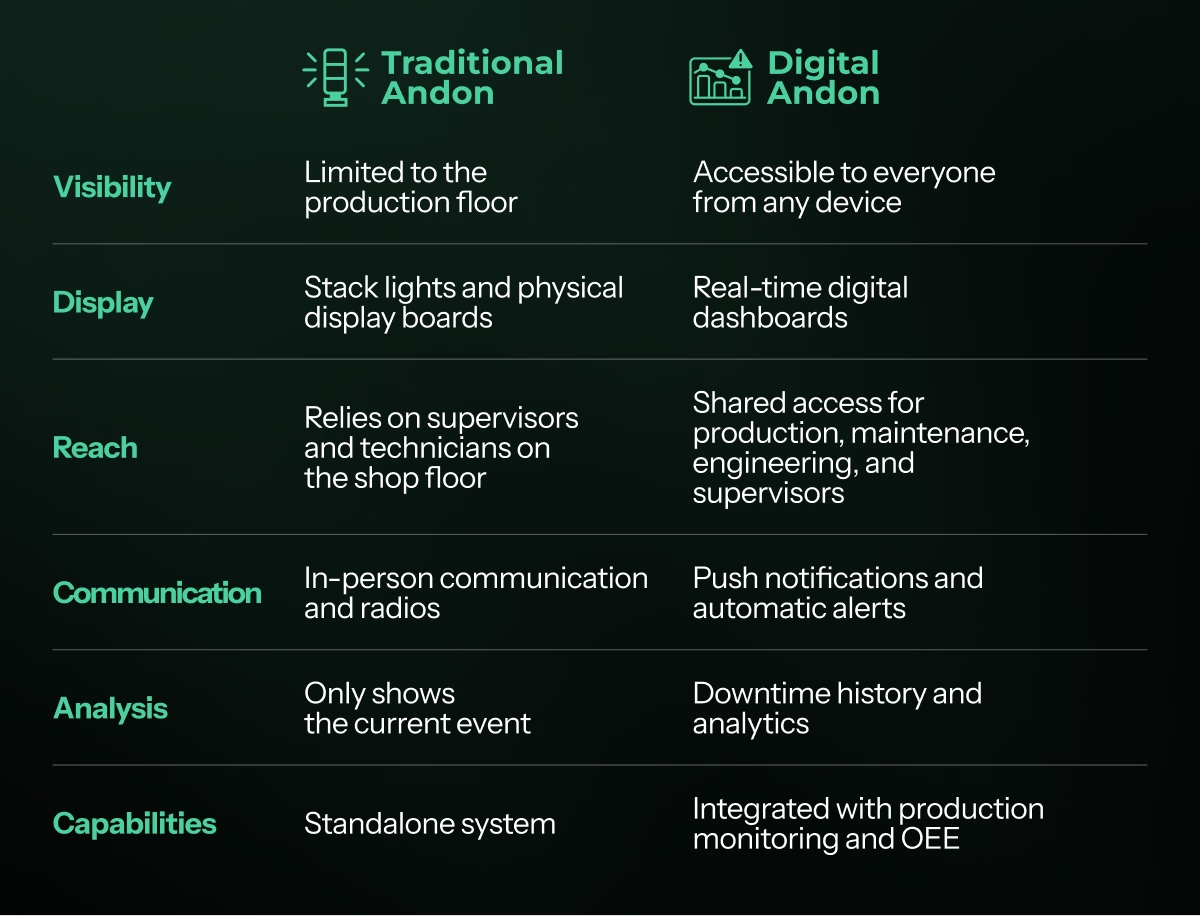
Here are some concrete differences in how each type manages boards:
Traditional Andon Board
- Visibility focused on the production area.
- Wired setups that may need to be physically close to the machine.
- Use of physical panels and local signage.
- Mostly in-person communication.
- Information centered on the immediate event.
Digital Andon Board
- Remote visibility from computers, tablets, and mobile devices.
- Wireless systems that can display real-time data anywhere on the shop floor or factory.
- Shared access for production, maintenance, engineering, and supervision.
- Faster communication between teams.
- User-friendly visualization of machine stops during the shift.
- Integration with production monitoring and analytics systems.
Explore our platform
The Real Benefits of an Andon System Are Visibility, Communication, and Alignment
Reacting faster to an operational problem is only part of the equation. The real benefits of a modern Andon system lie in the fact that it provides information transparency across the entire organization.
When every team in a factory sees the same information in real time, ambiguity is eliminated. This improves communication, makes it easier to coordinate resources, and speeds up decision-making. Instead of relying on phone calls, alignment meetings, or different interpretations of the same problem, everyone works from a shared view of the machines’ status.
This visibility also helps prioritize resources, focus continuous improvement efforts, and eliminate the causes with the biggest impact on productivity.
Digital Andon Systems: Increasing Visibility and Improving Communication for High-Volume Operations
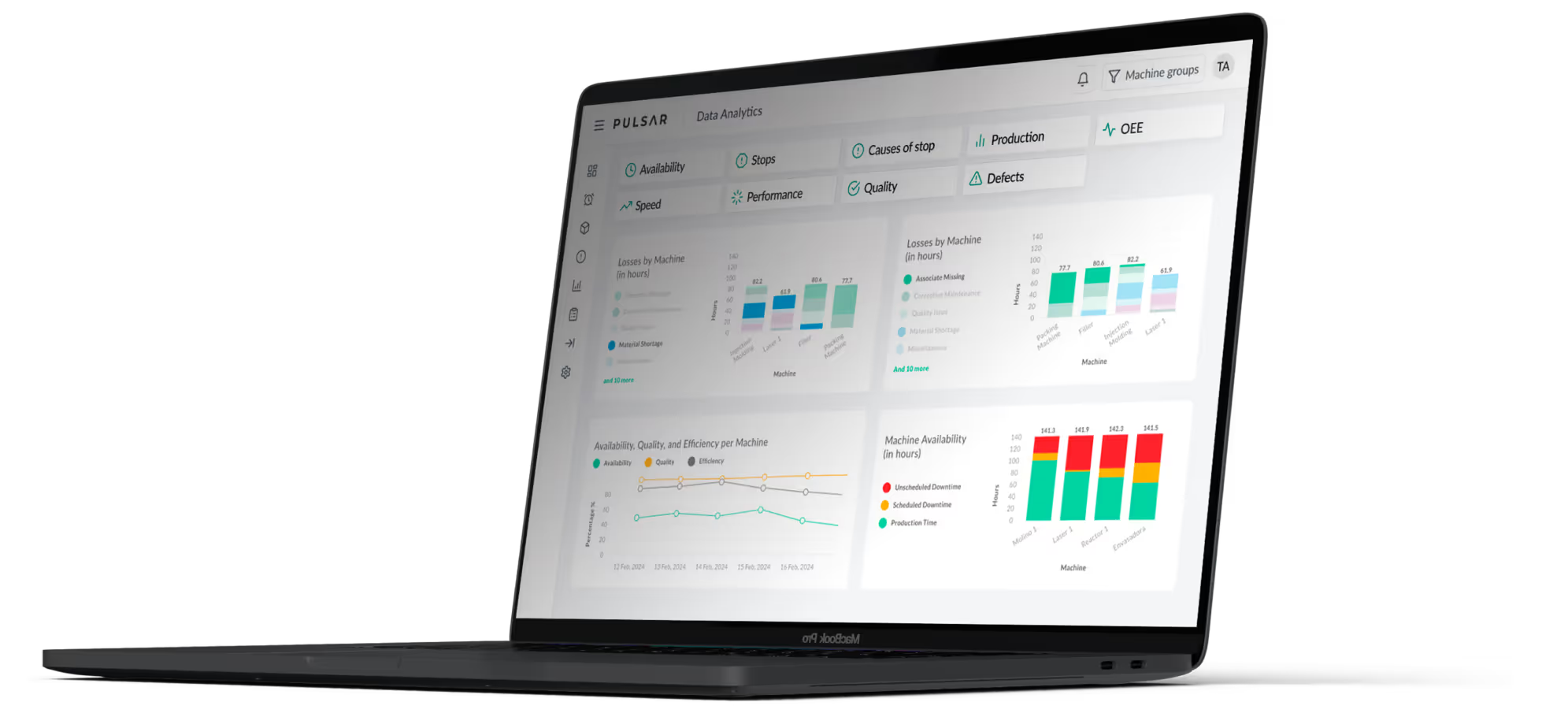
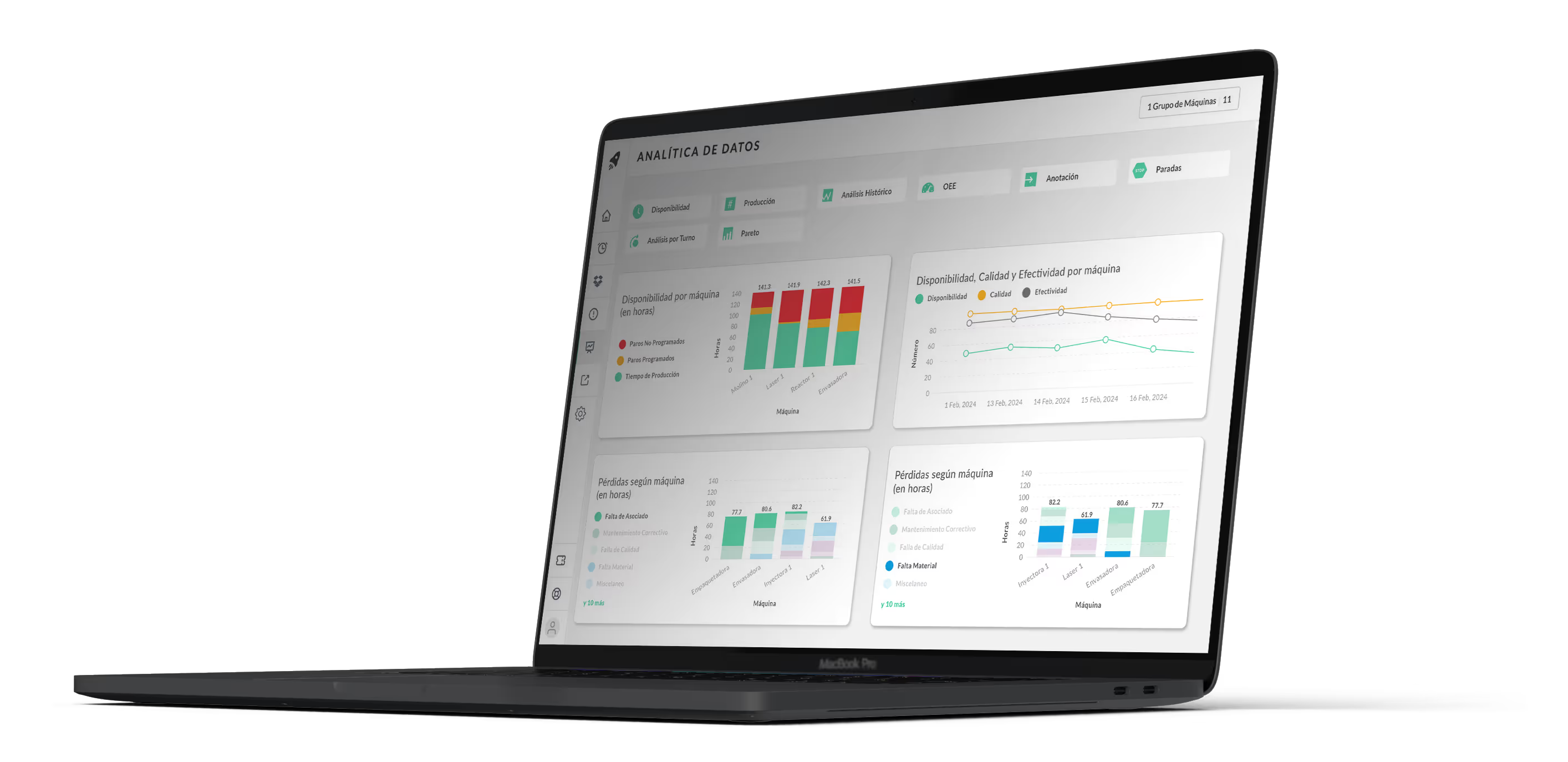
An Andon board on its own answers one fundamental question: what's happening on the shop floor right now? However, when integrated with production monitoring platforms, it can add much more context for decision-making, such as updated indicators or a view of what happened during the shift.
Digital solutions like Pulsar complement the traditional Andon concept with remote monitoring and automated analytics functionality, plus instant alerts. With this, production teams can act faster and prioritize their continuous improvement efforts.
If you'd like to learn more about our platform and digital Andon system, schedule a demo here.
Related articles
Request a Custom Demo
See how Pulsar’s manufacturing intelligence platform can help your operations today.