
Industrial technologies: how to choose the right solution for your factory
This guide covers the criteria plant managers should use to choose industrial technologies based on the operational problem, existing capabilities, and expected impact. It explains how to compare options, calculate total cost, validate adoption, and decide whether to implement, connect, or expand a solution.

Content
Choosing industrial technology for your factory is a high-impact operational decision. You need to identify the problem to solve, the result your factory expects, and how you'll confirm the investment paid off.
Modern factories often use industrial technology solutions for different objectives, from visibility on the shop floor to supply chain logistics. Knowing how each differs is useful, but it isn't enough to make the call. Two manufacturing facilities can evaluate the same technologies and need different solutions because of their processes, machines, available data, and priorities.
This article continues our guide on technologies and production systems, where we explained the scope of MES, SCADA, ERP, CMMS, OEE software, and Business Intelligence. Building on that, we take the next step here: defining what your industrial operation needs, what result it expects, and which criteria help you choose and validate the right solution for your manufacturing challenges.
Start with the problem you need to solve
The first step is turning a general concern into a specific use case.
Define an operational need or use case
"Digitalize the plant" or "get more information" are goals that are too broad. A clear need names the operational capability that's missing or explains how your team will use the platform in day-to-day work.
Keep in mind that every factory adopts technology differently. A modern factory isn't defined by how many screens or systems it has. It's defined by how well it uses those solutions to reach its goals.
A factory may need to improve production planning, rebuild a batch's traceability, monitor losses, organize maintenance, consolidate data, gain visibility, optimize processes, increase industrial productivity, drive continuous improvement, or make better decisions on the shop floor. Each problem leads to a different evaluation.
It also helps to separate the symptom from the need. Getting reports late is a symptom. Having automatic data during the shift may be the real need.
Tie the problem to a measurable result
Back the use case with a KPI: OEE, availability, output, number of machine stops, scrap, cycle time, quality, consistency across shifts, labor hours, effort, accessibility, or even response time.
Estimate as fully as you can what the company gains from a process improvement. If a line racks up hours of downtime, you can calculate the production capacity you'd recover by reducing them. Then compare that gain with the solution's cost. That's your return on investment.
Define the scope of the implementation
A need can affect one critical machine, a line, a process, an area, a whole factory, or multiple factories. That's why you should define the level of impact you expect from the solution.
Know your existing industrial technologies
Before adding a new industrial technology, a manager needs to know which capabilities they can build on. You don't need to run a technical inventory yourself. Your role is to define what information you need and ask the leads of each area involved to confirm how to get it.
Identify the current capabilities you can use
Manufacturing companies often have systems like MES and ERP, plus data from sensors, counters, and manually operated machines. Start by understanding which data you already have and which of it is already automated.
Sometimes the data already exists, but a connection, a report, or a consistent way to use it is missing. The decision doesn't always mean replacing what you have. Your factory can connect its current systems, add a specialized technology to cover a missing capability, or move forward gradually, starting with one machine or line.
Identify information gaps
Reviewing your existing industrial technology solutions shows what data you already have. It's just as important to see which metrics are missing. To improve a machine's performance, a general report may not be enough. You may need detailed data on machine states, cycles, speed, machine stops, history, and more.
The level of automation also matters, because it affects when you can access the information. For example, you may already calculate OEE, but the process is manual and slow. Real-time OEE monitoring helps manufacturers focus on production line efficiency. A digital Andon system also displays that information in real time to multiple teams immediately, without manual effort.
Make sure your team understands their role with the new technology
An industrial technology solution only creates value when the team builds it into how they work. Before deciding, define who will check the information, who will follow up, and which meetings or workflows will use the data.
Also assess the training, administration, and coordination effort. The risk of abandonment rises when the technology is complex and hard to use, when there's no training or documentation, or when no project owner or leader drives implementation and daily use.
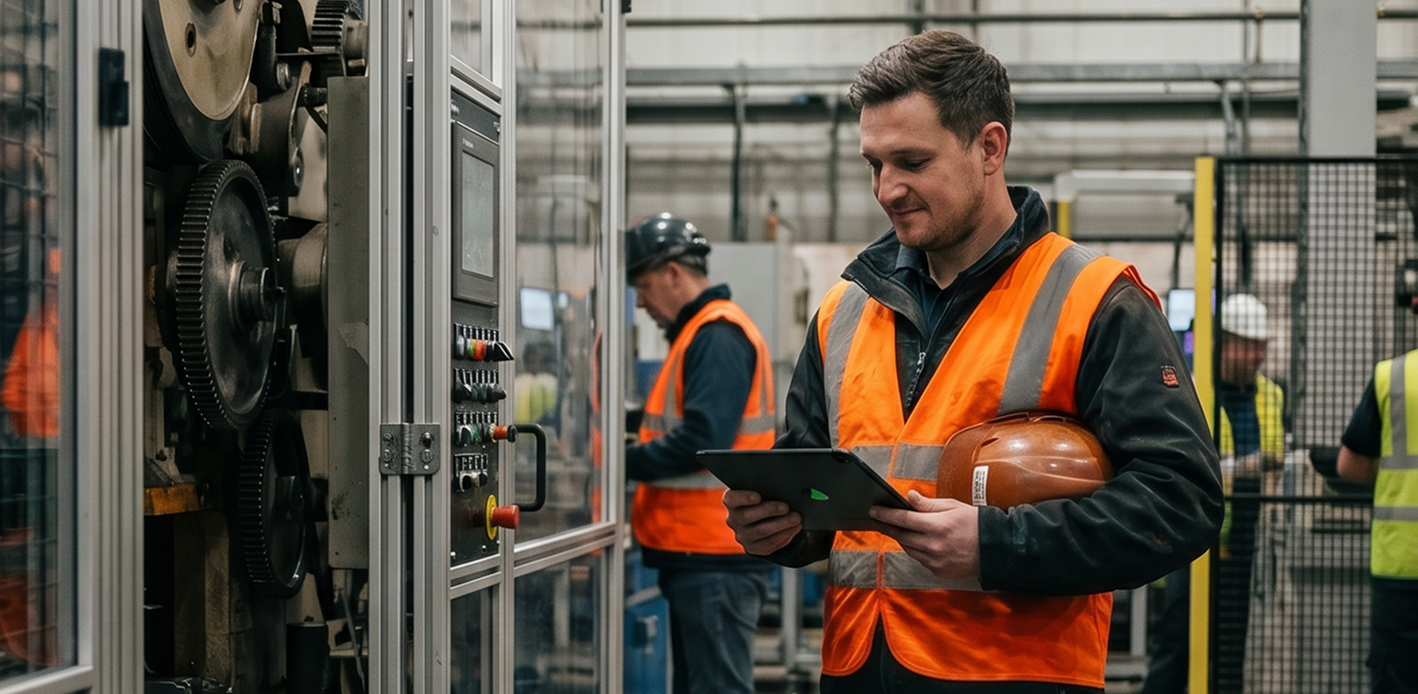
Criteria to compare industrial technology solutions
Once you've defined the use case, you can compare technologies using a few basic criteria.
Hardware, software or both
Check whether the solution includes only software or also the hardware to capture data from your machines. Software-only platforms usually rely on data your PLCs, SCADA, or other systems already collect. That works well when your machines are connected, but older or conventional machines may stay out of view. A solution that includes its own data capture devices and sensors can bring those machines into the system too. Ask who supplies, installs, and supports each part, so you know exactly what the proposed solution covers.
Compatibility with existing machines and infrastructure
Find out whether implementation requires modifying PLCs, installing specialized hardware, or stopping production. Some options may not make sense if they bring outsized costs, timelines, or risks. Some machines may also end up left out of the system because they aren't compatible or have no way to connect.
Connectivity with other systems
Confirm whether the solution offers APIs, data export, and ways to share information with other systems, like MES software, ERP, or BI.
Data quality and level of detail
Check whether the data reflects the actual process, updates as often as you need, and supports comparisons within the scope you defined.
Use and implementation
Confirm how your team will use and access the information, and which implementation could improve your existing workflows. For example, a screen with a live dashboard can boost visibility in an area with frequent machine stops.
Also make clear which records will stay manual and how much effort it will take to keep the data current.
Scalability
Some solutions let you start with a few machines, but you'll need to expand later. Scaling means planning for new licenses, devices, users, plants, and connections. If you plan to modernize multiple areas or factories, evaluating these criteria should be a priority.
Implementation, training, and support
Proposals should spell out timelines, responsibilities, and resources. Know when you'll start getting useful data and what level of support the vendor provides.
Expected impact and total cost
The purchase or subscription price isn't the full cost. Factor in additional licenses, installation, connections, training, support, maintenance, expansions, and internal hours. Also check whether any hardware carries an extra cost.
How to validate the decision before moving to implementation
A pilot gives you evidence before a large investment. Whenever possible, it should test your use case, not just show that the technology works.
Define the conditions and success criteria
Decide which machine, line, or process will take part, how long the test will run, which KPI will serve as the baseline, and who will use the tool.
The pilot should confirm both technical capability and day-to-day usefulness on the shop floor.
Evaluate data quality and implementation
Check whether the data matches what happens in the operation, helps you analyze the problem, and gets used consistently. Also record the support you needed and any challenges that came up during implementation.
Explore our platform

Modernizing the factory: When is a monitoring platform the next step?
Real-time visibility into your manufacturing operations is a key step toward becoming a modern factory. A monitoring platform becomes a priority when you lack visibility into your machines and your factory needs operational data to make decisions about production improvements, process optimization, special projects, and more.
When you're missing reliable machine data
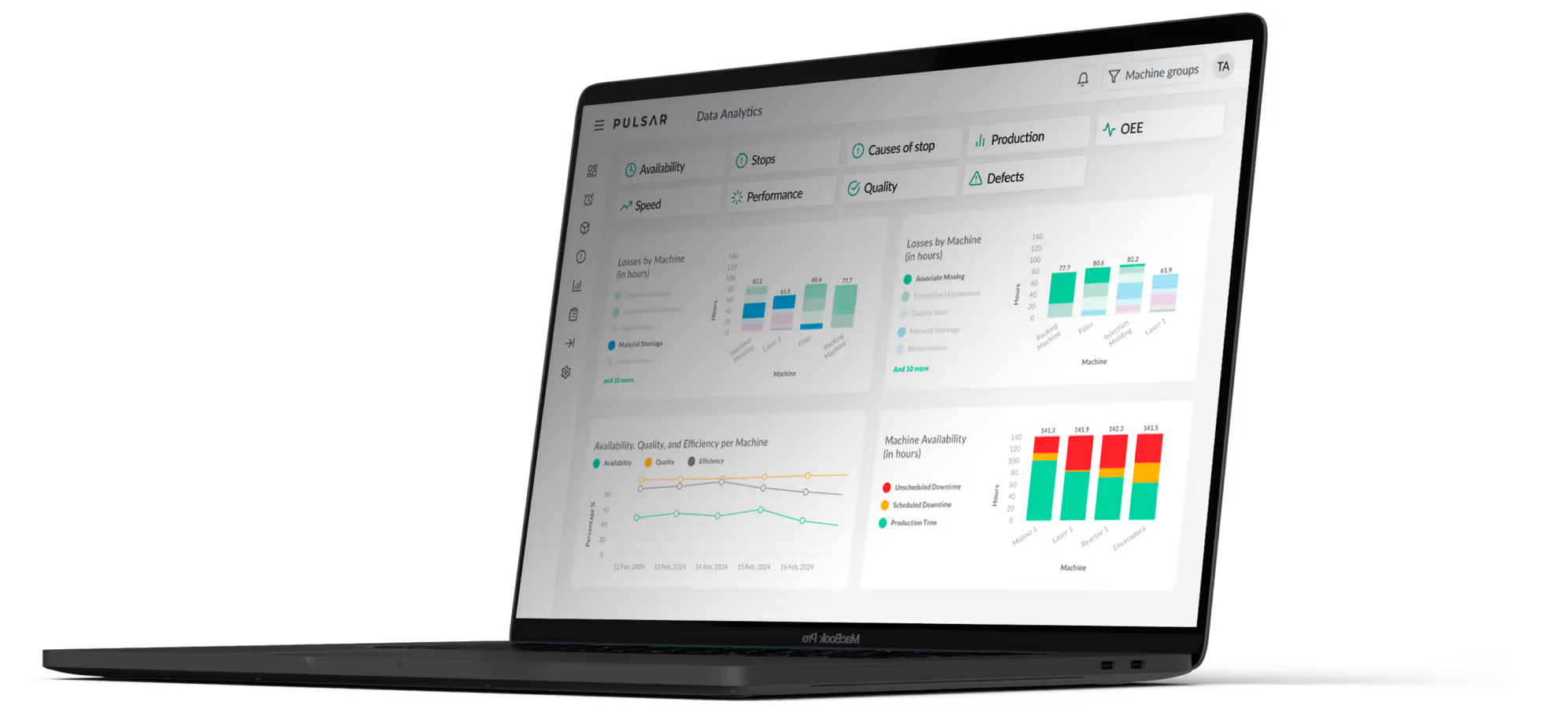
Pulsar automatically captures data on output, availability, cycles, speed, machine stops, OEE, and over 25 KPIs. This drastically reduces your reliance on manual reports and spreadsheet rework.
When your plant runs machines from different generations
Pulsar's industrial data capture devices and sensors can bring conventional and legacy machines into the system without touching their PLCs. Your factory gains real-time visibility without starting with a full machine replacement.
When you need to compare operational performance
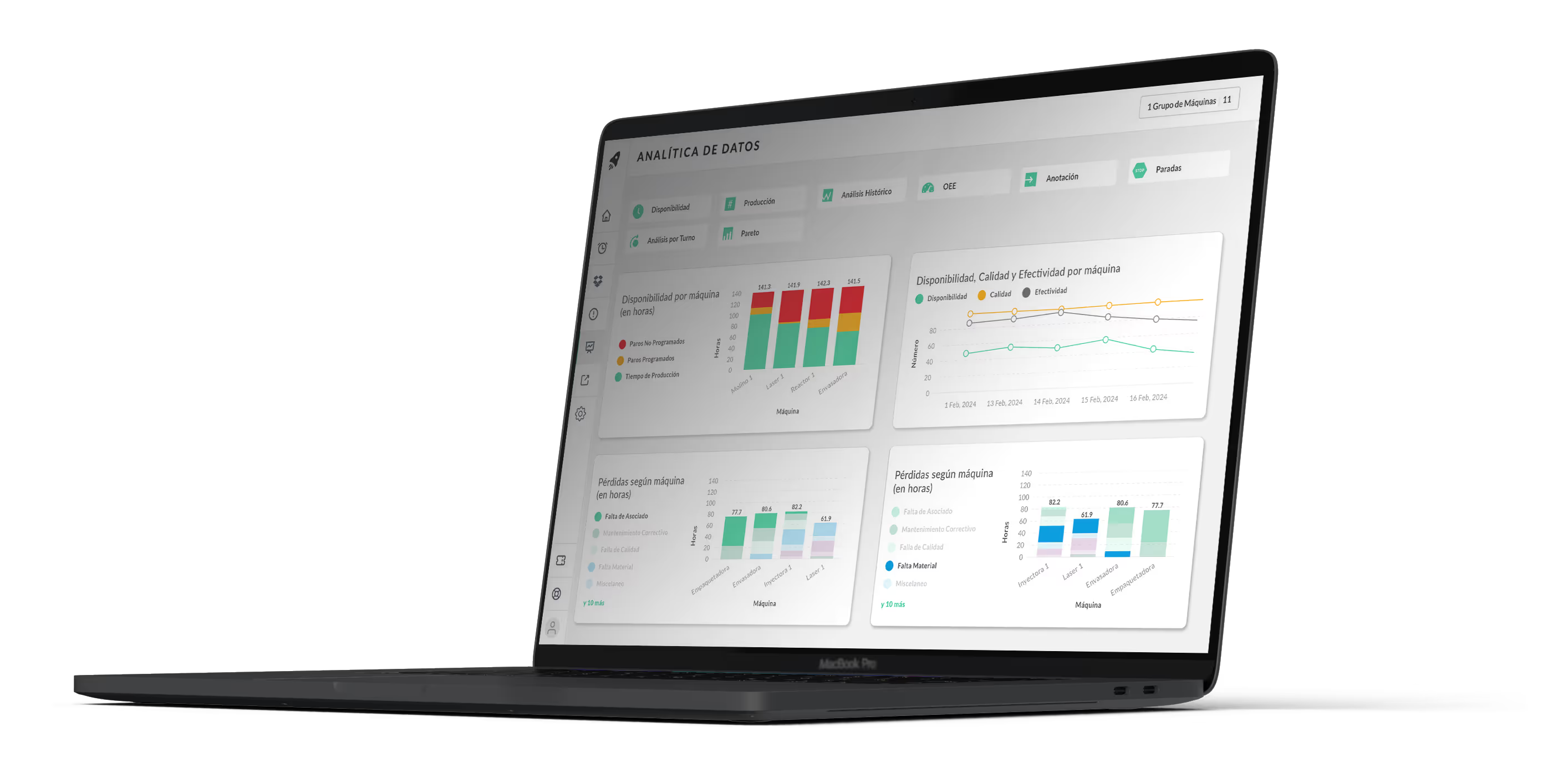
Dashboards, historical data, and reports let you analyze machines, lines, shifts, and time periods.
This information helps you see where losses concentrate and evaluate the results of the improvements you put in place.
Schedule a demo to see how Pulsar gives you visibility into your machines' performance.
Frequently asked questions
How do you know which industrial technology a manufacturing facility needs?
Start by defining the operational problem, the expected result, and the data you need to measure it. Then identify your existing capabilities and compare solutions by scope, the types of machines you run, impact, adoption, compatibility, cost, and implementation.
What should you evaluate before implementing MES software?
The production team should decide whether it needs better order coordination, traceability, or standardized execution. It should also review what data the MES will exchange with the ERP, the machines, and other platforms, along with the effort and cost of adoption.
When does it make sense to implement a monitoring platform?
It makes sense when your factory needs reliable, timely data for continuous improvement, visibility, industrial productivity, machine performance, and KPIs like OEE, output, cycles, speed, machine stops, and availability. It's especially useful if you still rely on manual records, run legacy machines without connectivity, or spend a lot of time and effort building reports to compare shifts and time periods.
Related articles

Request a Custom Demo
See how Pulsar’s manufacturing intelligence platform can help your operations today.