
Manufacturing execution system software and other production systems: what each one does
This article explains what Manufacturing Execution System software, SCADA, ERP, CMMS, OEE software, and Business Intelligence tools do on the shop floor. Learn what data each system provides, how they work together, and where Pulsar fits as a machine monitoring and operational analytics platform for manufacturing companies.

Content
Not every system or technology in a manufacturing facility does the same job or delivers the same data. Depending on your factory's goals, one solution may take priority over another. You might focus on productivity and efficiency, on better maintenance processes, or on tracking and executing production orders.
For example, Manufacturing Execution System software manages and tracks production execution. Other needs, like monitoring machines, organizing maintenance, planning resources, or analyzing OEE, call for different types of platforms. Most manufacturing companies need several solutions, and these often work together and share data.
In this article, we explain what each manufacturing software does, including MES, SCADA, ERP, CMMS, OEE software, and Business Intelligence tools. We also explain how they relate and how to tell which ones your operation needs.
What does Manufacturing Execution System software do in manufacturing?
MES software, or Manufacturing Execution System, manages production execution. It sits between business planning and shop floor activity. ISA-95 is an international standard that connects business management systems with control and automation systems. It places manufacturing operations management in this layer, along with the data it exchanges with business and control systems.
Before you choose an MES, define which processes it needs to manage or coordinate.
Production execution and tracking
An MES helps you release and track orders, assign operations, record progress, and see what you're producing. It can also deliver work instructions and show each order's status through key indicators like output, quality, and speed.
This lets supervisors spot late orders, pending operations, and gaps against the schedule.
Traceability, quality, and schedule adherence
Depending on its setup, an MES can record the materials used in an order, the machines a batch went through, and the quality checks performed.
One of the main benefits of using an MES is being able to check order progress against the schedule and identify delays. This is valuable when you need consistent documentation, quality tracking, and detailed product history.
MES software: When it’s relevant
If your records are scattered, orders and operations are poorly coordinated, or traceability is hard to rebuild, an MES can improve your processes. It also helps standardize work instructions, manage document versions, and track multiple lines and products.
Adopting an MES can be part of industrial automation, but it doesn't physically automate your machines. The MES organizes and records execution. Direct machine control happens in other layers.

Main manufacturing technology solutions used in factories
Beyond MES software, there are manufacturing technology solutions built for supervision, maintenance, performance, and analysis. Each one answers a different question.
SCADA for process supervision and control
SCADA collects and displays machine and process variables: temperatures, pressures, levels, statuses, and alarms. These systems are a core part of industrial automation and process control, and they help keep production running.
SCADA sits closer to the physical process than an MES. It lets you observe and act on operating variables. To work, it relies on PLCs, sensors, HMIs, and wired networks.
OEE software to analyze performance losses
OEE software measures availability, performance, and quality, along with OEE and other metrics. Beyond the overall percentage, it helps you identify losses from machine stops, slow cycles, reduced speed, and defects.
Some OEE software solutions capture machine states and counts directly. Others receive them from PLCs and other sources. Either way, they help you compare machines, shifts, and time periods.
Pulsar stands out among these solutions as a machine monitoring and operational analytics platform.
ERP to plan resources and business operations
ERP manages purchasing, inventory, costs, sales, accounting, and resources. It can create a production need, but it doesn't direct each machine's activity. Its role is administrative, since it's where the company manages its business processes. Some ERPs include machine monitoring components, but these are add-on modules.
ERP and MES work together in different layers. The ERP tells you what the business needs, like what to produce and materials. The MES turns that into planning and orders on the shop floor, and also keeps track of the progress. So MES also reports back on what materials were used and how long did it took to finish orders, so supervisors and managers can plan accordingly.
CMMS to manage maintenance
A CMMS centralizes machines, work orders, preventive maintenance plans, repairs, failures, and spare parts. It organizes maintenance, not production. It often provides maintenance metrics too, like machine stops, MTBF, and MTTR.
With a CMMS, your team can plan, document, and organize the work done on each machine: tasks, owners, spare parts, and upcoming service.
Business Intelligence to consolidate and analyze data
Business Intelligence connects, models, and visualizes data from different sources, including the shop floor. It can combine ERP, MES, maintenance, quality, and monitoring data into business KPIs, custom reports, and visualizations.
BI doesn't replace the systems that capture machine data. It gives you a consolidated view to compare plants, relate production to costs, or analyze trends across departments.
Explore our platform

Pulsar's role in the manufacturing technology ecosystem
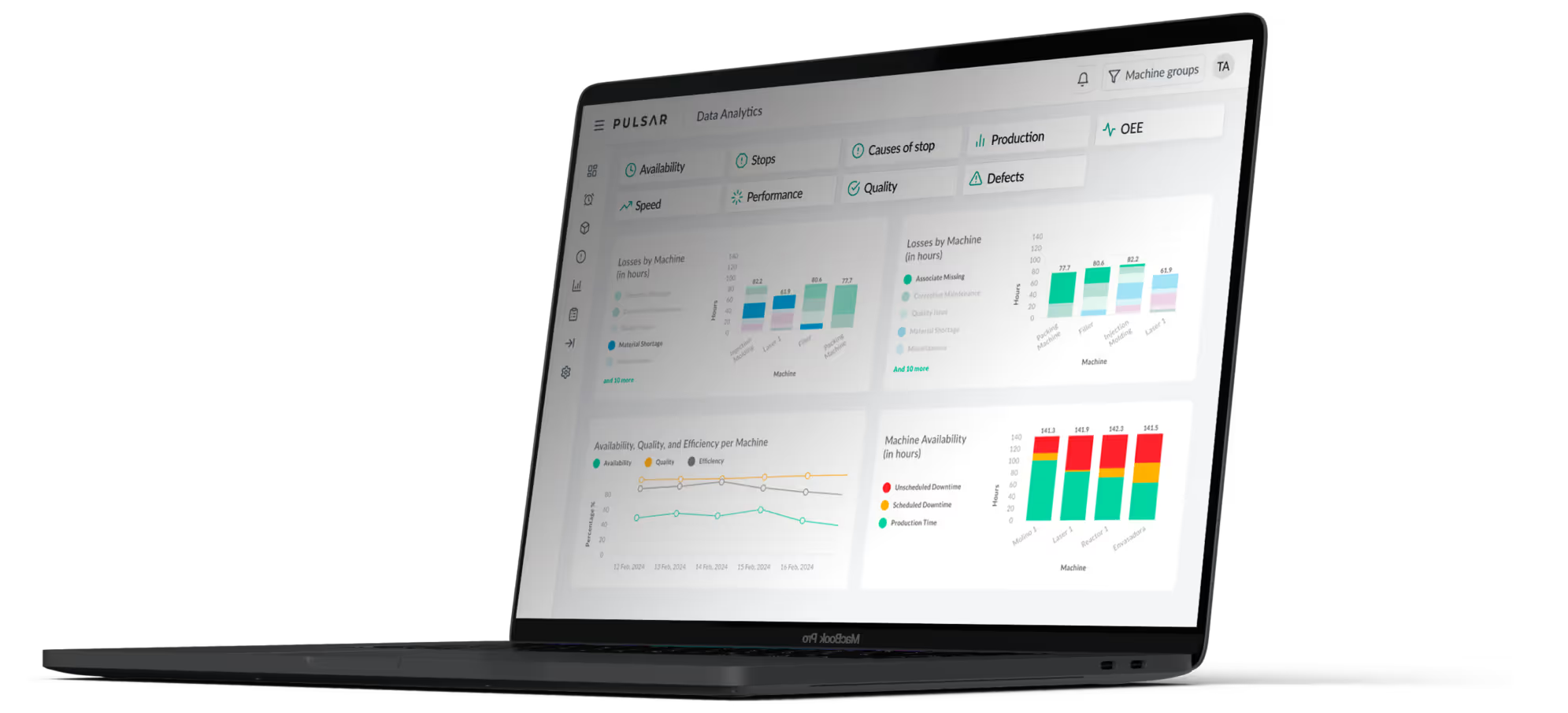
As a manufacturing technology solution, Pulsar works as OEE software and a machine monitoring and operational analytics platform. It pulls data straight from your machines and turns it into KPIs, history, reports, and alerts. It complements your existing systems and gives you better visibility across the shop floor.
Captures data directly from your machines with Industry 4.0 capabilities
Pulsar's industrial data capture devices and sensors monitor output, availability, cycles, speed, machine states, machine stops, and over 25 key metrics. Automatic capture reduces reliance on end-of-shift logs and gives you up-to-date information on how each machine behaves.
It also connects to conventional and legacy machines from different brands without touching their PLCs.
Centralizes monitoring and historical analysis
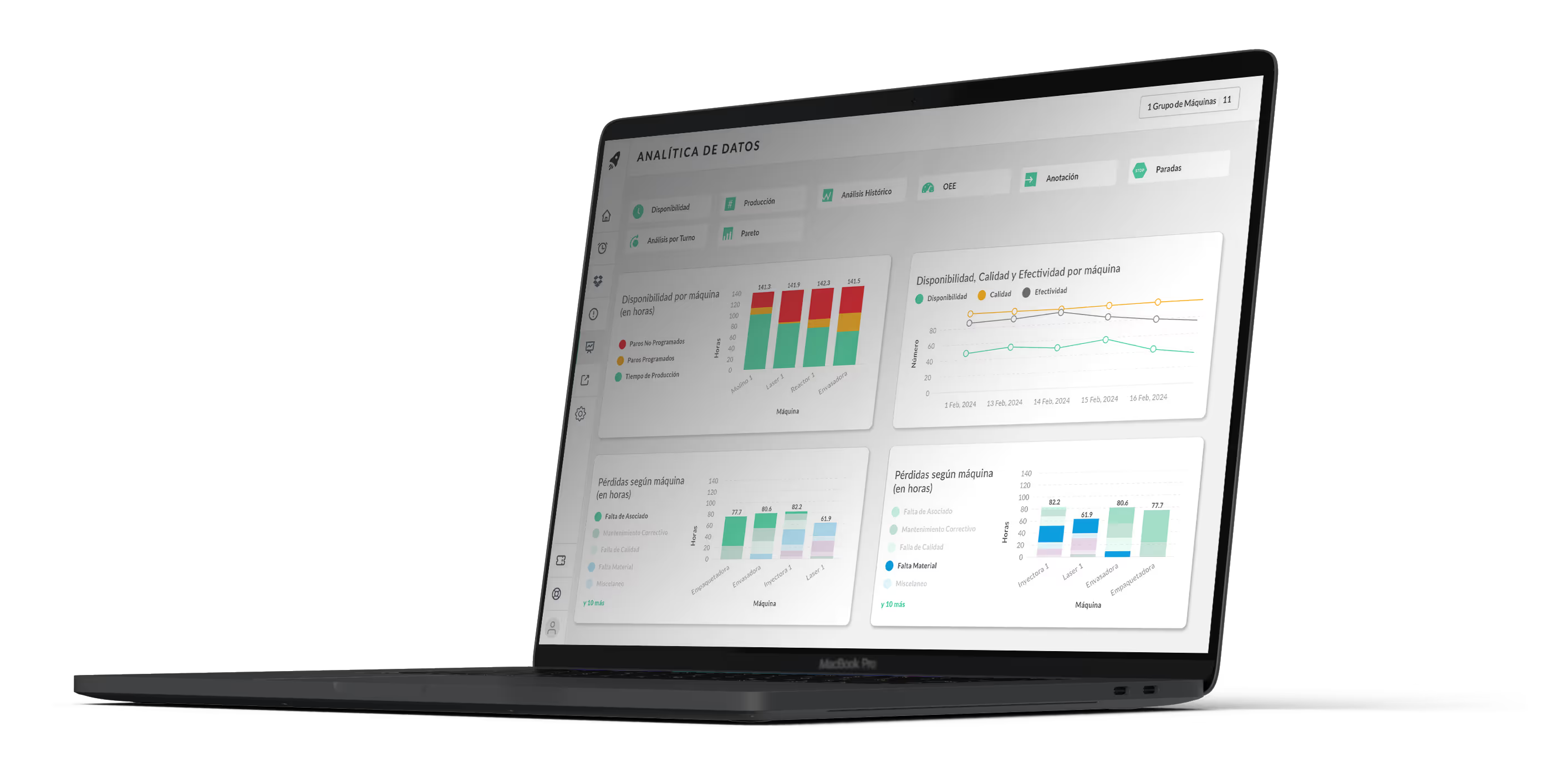
Dashboards show KPIs in real time and let you compare performance across machines and lines of different types, shifts, and time periods. Historical reports help you spot recurring issues and confirm whether an improvement produced a lasting change.
Alerts can also notify the people your factory chooses about events or deviations.
Connects and works with other systems
Pulsar connects through APIs and adds operational data to an ecosystem that already uses MES, ERP, BI, or other platforms. For example, machine data can show progress on ERP production orders or feed a broader BI analysis.
Helps you start without replacing your infrastructure
A manufacturing facility can start by monitoring the critical machines or processes it needs to understand better. From there, it can expand coverage based on results and priorities, without a large upfront investment in new technology infrastructure.
Schedule a demo and see how our OEE software can improve your production processes.
Frequently asked questions
What's the difference between an MES and an ERP?
ERP plans and manages resources like inventory, purchasing, costs, and demand. MES coordinates and records order execution on the shop floor.
What's the difference between MES and SCADA?
MES is execution- and order-focused, while SCADA focuses on real-time process monitoring and control. MES manages orders, operations, traceability, and progress. SCADA collects machine variables and metrics, supports process supervision, and can send commands to machines through PLCs. They work on different time scales: SCADA tracks what happens second by second, and MES tracks orders, shifts, and batches. The two systems can connect, but they work in different layers and serve different purposes. SCADA also relies on physical infrastructure, like PLCs, sensors, and networks.
Can MES software monitor machines?
Some MES systems receive machine states, counts, or events from PLCs, SCADA, and monitoring platforms. However, not all of them capture data directly or offer the same level of machine analysis.
What software helps find a production bottleneck?
An MES can show execution delays. OEE software and monitoring platforms compare cycles, speeds, output, and machine stops. BI can combine this data with other sources. These tools give you the evidence to locate the constraint, and your team then analyzes the root cause.
Can a monitoring platform connect to an MES?
Yes, as long as both solutions offer integration methods like APIs. A monitoring platform tracks machine states and KPIs, while the MES combines that data with orders, products, and operations to give execution context.
Related articles

Request a Custom Demo
See how Pulsar’s manufacturing intelligence platform can help your operations today.