
OEE in the Digital Age: The Benefits of OEE Software vs. Manual Measurement
Discover why manufacturing companies are switching from manually measuring production efficiency to using OEE software to track their metrics automatically.

Content
For decades, the OEE metric has been one of the most widely used indicators for understanding production efficiency in manufacturing facilities. It provides a structured way to measure how well machines are operating by combining three core factors: availability, performance, and quality.
The metric itself is not new, and its purpose has always been the same: to measure the true productivity of industrial machinery by identifying losses to maximize efficiency.
What has changed over time, however, is how it is measured. In this article, we explore why more manufacturing facilities are moving from manual OEE measurement to a digital approach, the advantages this transition offers, its impact on your production, and what modern manufacturing analytics look like today.
What Is OEE and Why Is It Still the Key Production Metric?
OEE (Overall Equipment Effectiveness) is one of the most widely used metrics in manufacturing for evaluating the production efficiency of a machine or production line.
Its value lies in combining three core dimensions of operational performance:
Availability
Measures how long the equipment was actually in operation relative to the planned production time, accounting for losses due to machine stops.
Performance
Evaluates whether the machine is operating at the expected speed and identifies losses from speed reductions.
Quality
Reflects what percentage of produced parts meets required standards, excluding defects.
The OEE formula multiplies these 3 components:
Availability x Performance x Quality
By integrating these three factors into a single metric, OEE enables identification of the main operational losses. For this reason, it has become the foundation of continuous improvement methodologies such as Lean Manufacturing and Total Productive Maintenance (TPM).

How Is OEE Measured When Production Tracking Is Manual?
Although the OEE metric is well-known in manufacturing, how it is measured still varies widely across companies and sectors. In many industrial environments, the data needed to calculate it is logged manually during everyday operations.
This typically means operators or supervisors document the following metrics through direct observation:
- Machine downtime
- Piece count
- Defective parts
- Causes of machine stops
These records are usually kept in formats such as paper forms, shift reports, or Excel files. The data is then gathered, cleaned, and consolidated to calculate performance metrics that will inform process optimization actions.
This approach provides a general reference for operational performance and efficiency management. However, it also introduces several practical limitations.
First, the data is entered manually, which can lead to omissions or inconsistencies. In addition, information is often only available hours after production, making it difficult to respond to problems in real time.
Another common challenge is visibility into events like micro-stops or small speed losses. When data is logged manually, these events often go unnoticed, even though they can significantly impact production efficiency.
Lastly, bringing reports together and cleaning up information to calculate metrics can take a lot of time and effort. How can your team react quickly to a situation if they get the details of what happened a week later?
For this reason, more manufacturing teams are migrating to digital OEE measurement, using industrial sensors and OEE software that automatically capture data and enable real-time analytics. As we will see below, it is a powerful tool for shops and factories trying to improve manufacturing efficiency.
The Benefits of Measuring OEE with Software Instead of Manually
When OEE software captures data directly from machines using high-precision industrial sensors, the measurement process changes significantly. Information is no longer reconstructed from reports; instead, it is generated in real time from the operation itself.
How does this automation improve manufacturing efficiency? It offers several important advantages for production management.
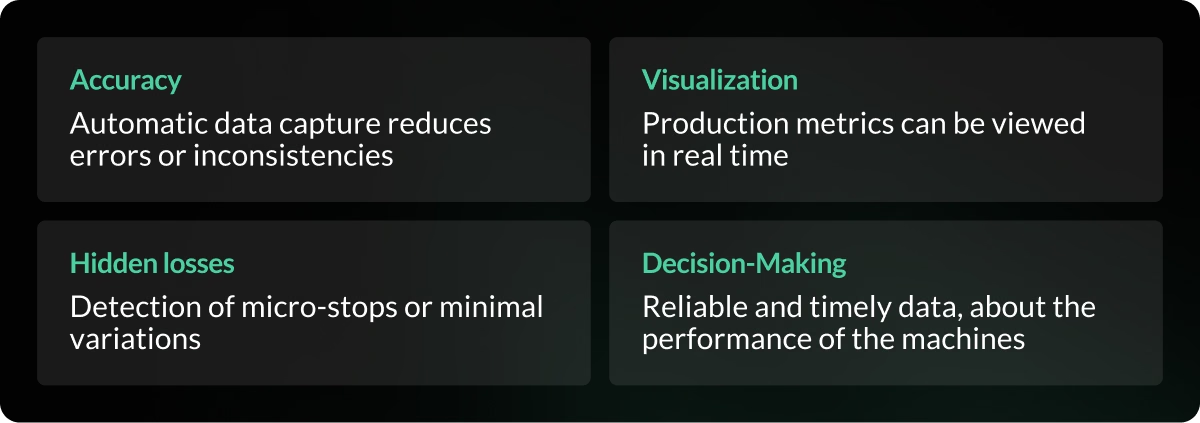
More Accurate Data
Automatic data capture reduces the likelihood of errors or inconsistencies. This allows production metrics to reflect more faithfully what is actually happening on the shop floor.
Real-Time Visibility
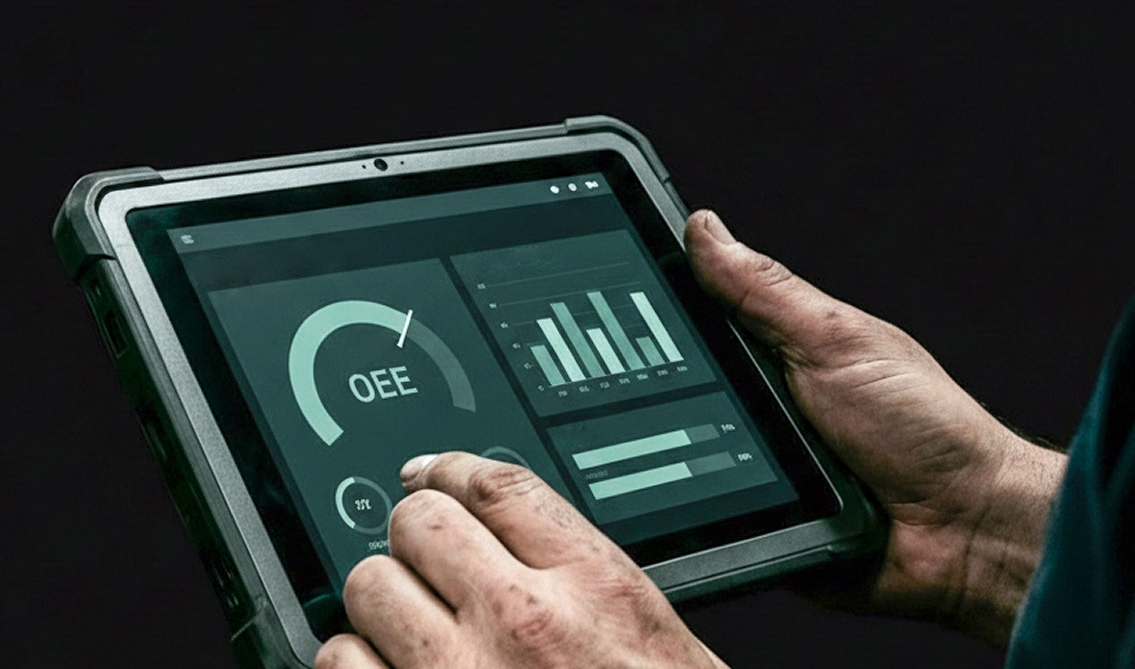
When data is logged automatically, metrics can be viewed as production happens. This enables the detection of machine stops, speed drops, or operational anomalies without waiting for production reports that may not be ready until the following week.
Detection of Previously Hidden Losses
Events such as micro-stops or small variations in production speed are often imperceptible to the human eye. An automated machine monitoring system can accurately identify these events, reveal efficiency losses that previously went undetected, and help you make the most of your manufacturing capacity.
Better Operational Decision-Making
With more reliable, timely data, production teams can more clearly analyze what happened during a shift and how machines behaved, using precise performance metrics, and prioritizing continuous improvement actions that directly impact production efficiency.
In this context, OEE software does not change the metric itself. It transforms how the information needed to calculate it is obtained and used as a real tool for operational improvement.
How to Start Measuring OEE Digitally Without Complex Projects
Adopting a solution for digital OEE measurement in production does not necessarily mean a long project or a complex integration with existing plant systems.
For years, many industrial digitalization initiatives have relied on PLC integrations, custom software development, or retrofits. These approaches can require months of implementation, large upfront investments, and specialized technical teams.
Today, analytics for manufacturing is possible through agile alternatives that enable and support companies that are looking to implement digital OEE measurement. Solutions like Pulsar introduce a modern approach to industrial process monitoring.
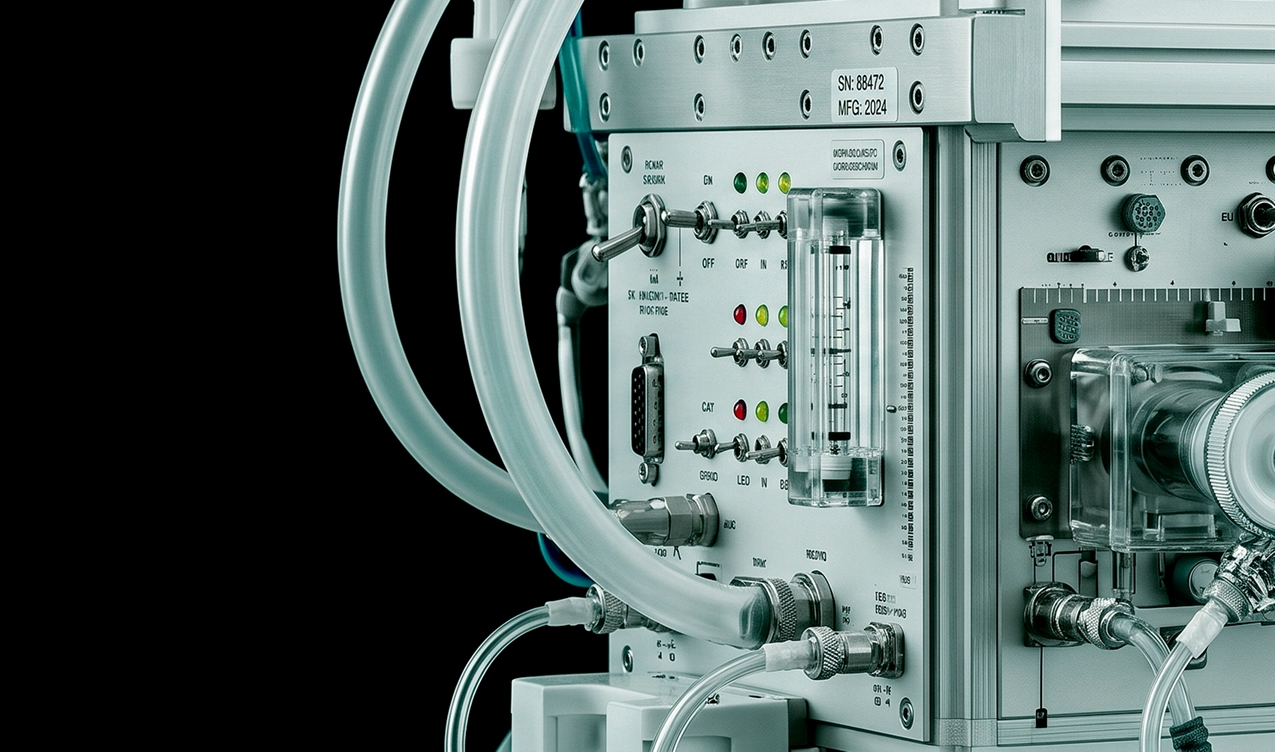
Our platform combines hardware and software to capture data directly from machines in real time using high-precision external capture devices, including industrial IoT sensors and smart cameras. This approach delivers operational insights from the shop floor without modifying PLCs or interfering with existing control systems.
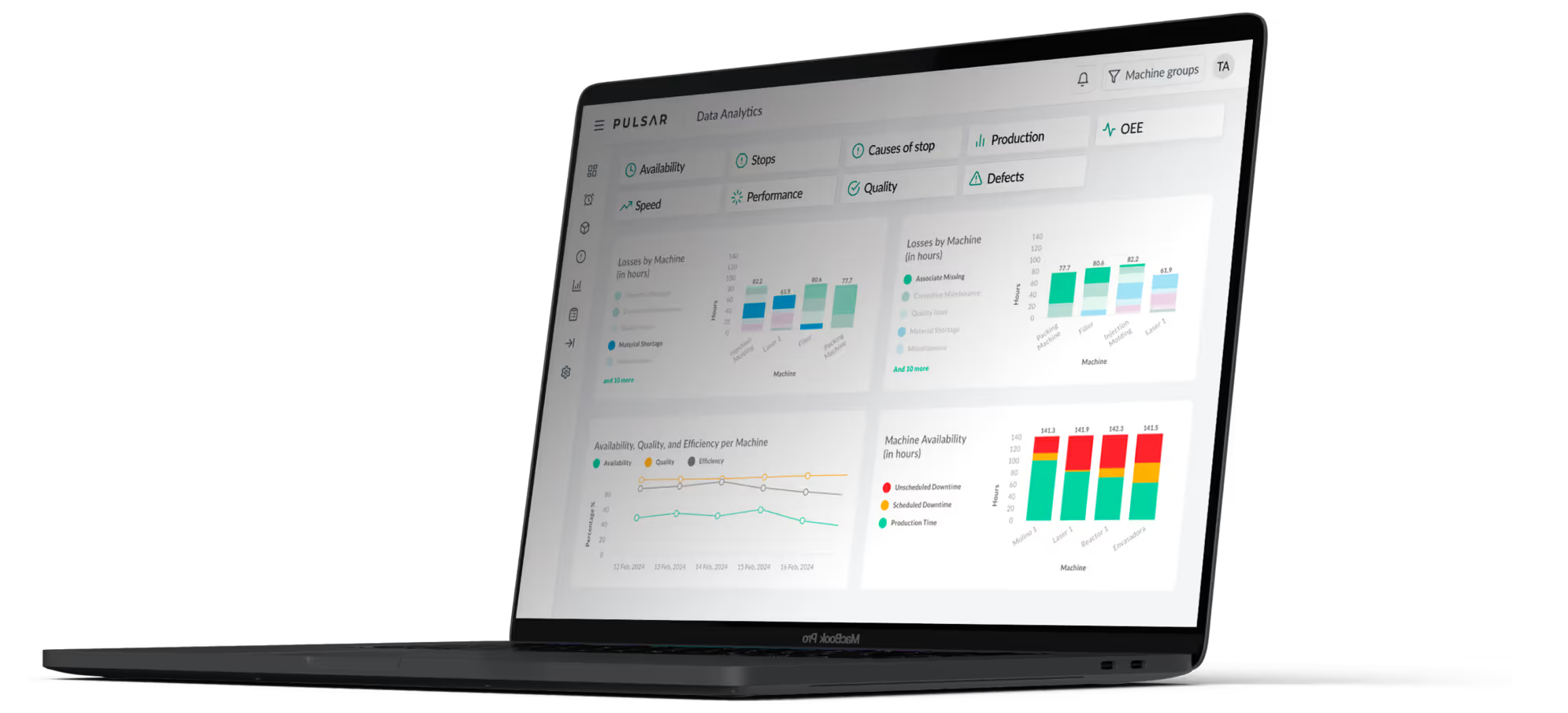
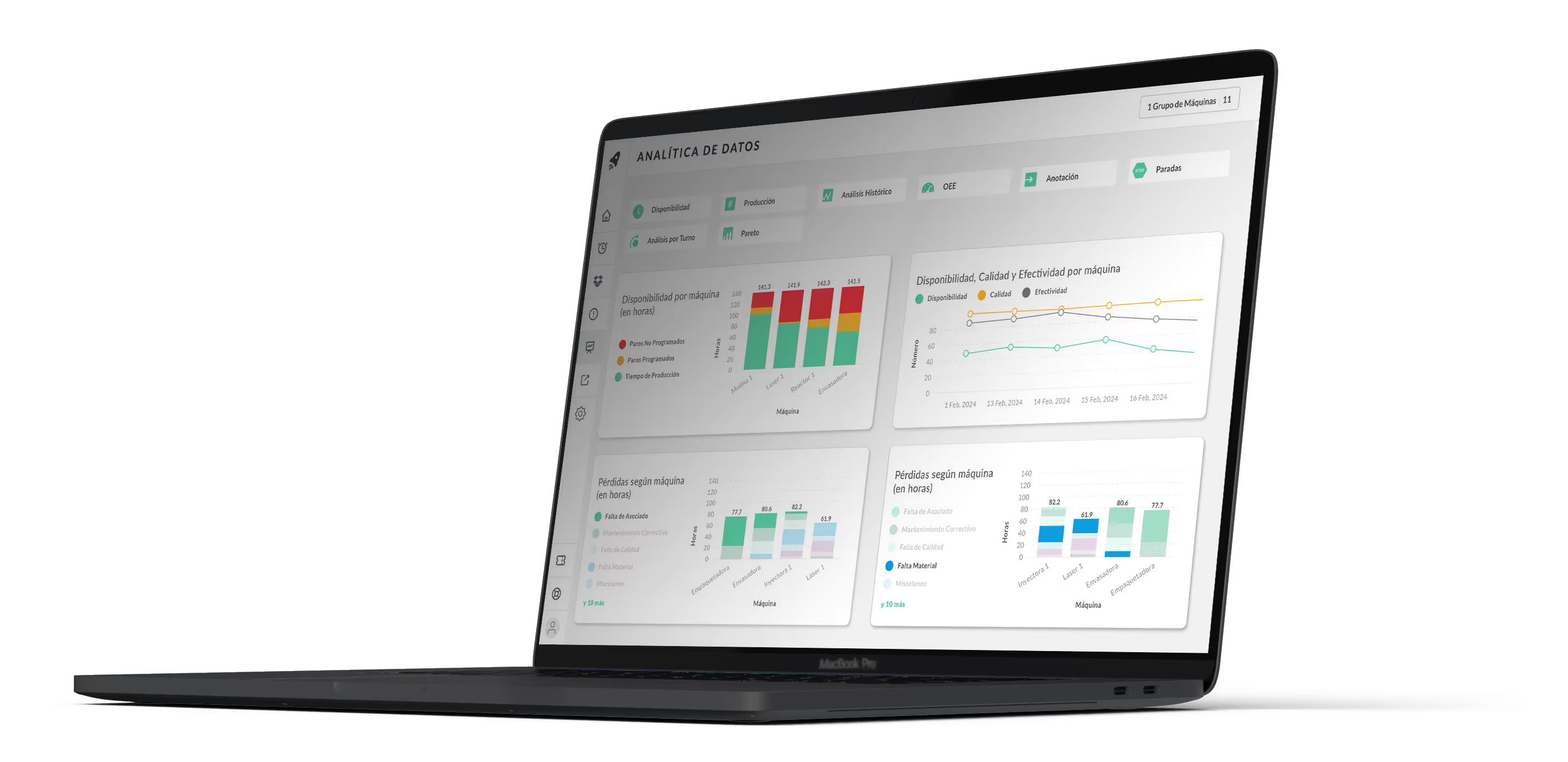
Rather than relying on complex integrations, Pulsar captures, processes, and connects data through its own hardware, transforming it into real-time operational metrics. Plus, it makes it easy to access through an intuitive interface.
This enables companies to start measuring OEE in production with automated solutions and gain immediate visibility into operations, delivering value from day one.
It is agile approach changes the way industrial digitalization is adopted. Instead of replacing machines and acquiring costly infrastructure, manufacturing companies today can use modern, flexible, and minimally invasive technology to understand what is truly happening on the plant floor and drive operations forward.
Real-time Analytics for Manufacturing: The Next Step Toward Improving Manufacturing Efficiency
As manufacturing companies move toward more connected, data-driven environments, manual OEE measurement is increasingly falling short of today's requirements for visibility and operational responsiveness. This is why taking the step toward digitalization offers so many benefits.
However, digitizing OEE measurement without the right tools or platform can be a high-risk and costly endeavor for growing companies.
The best tools for manufacturing optimization are those that provide real-time visibility without disrupting your current setup or operations. Manufacturing intelligence platforms like Pulsar offer a new approach to monitoring performance metrics for process optimization: they are agile, do not depend on PLCs, and align with the latest Industry 4.0 technologies.
If you are interested in understanding how this approach works and how it can be applied in your shop floor, you can learn more about our monitoring platform and discover how to start tracking OEE in production in real time. Schedule a demo today.
Related articles
Request a Custom Demo
See how Pulsar’s manufacturing intelligence platform can help your operations today.