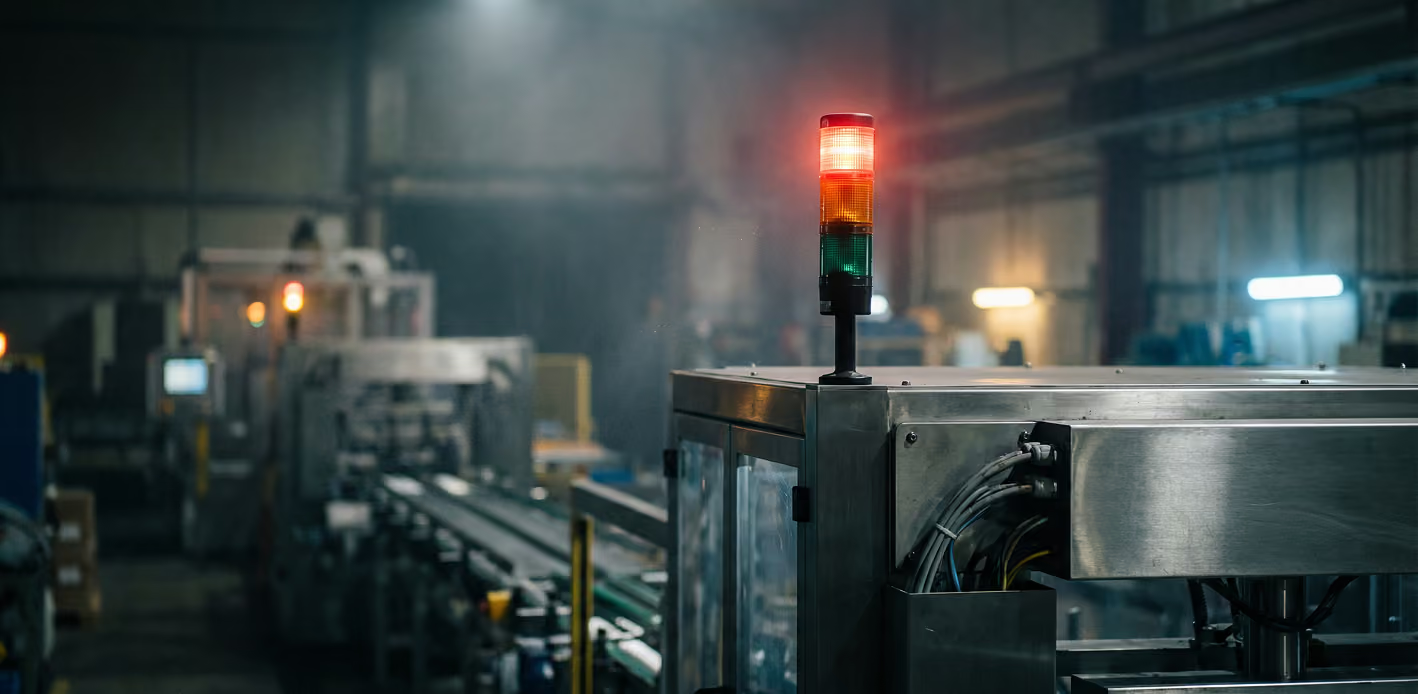
Machine connectivity challenges: Legacy equipment with no PLC
One of the most reliable machines on your floor may also be one of your biggest data blind spots. When an asset has no PLC or limited controller access, teams may know that it is producing, but not precisely when it runs, stops, or loses speed. That missing context weakens OEE analysis and slows continuous improvement. This article explains the most common machine connectivity barriers and how a phased, minimally invasive data-acquisition approach can bring legacy equipment into a common visibility layer.

Content
Machine connectivity is a challenge on almost any shop floor, where you'll find machines that have been running for decades. They still cut, press, mold, and pack exactly as they should. The problem isn't that they've stopped working. The problem is that they are critical for production but can't tell you how they're performing. No data, no visibility, no easy way to connect them. This challenge is present for manufacturing companies of all sizes across the world.
Connectivity isn't a vanity project or a passing trend. Accurate data from machine performance is what makes continuous improvement projects and kaizens deliver lasting results. Monitoring OEE and production metrics on legacy machines and older equipment is as important as tracking it on newer machines. It's the same drive for measurement and visibility that manufacturing has pursued for decades, now extended to every productive corner of the shop floor. That's why enabling connectivity on legacy machines with no PLC is a must for plant managers and leaders trying to improve efficiency and achieve scalability.
The good news: you don’t need to replace your machines; today there are new ways to connect them. With digital technologies, there are new ways to enable real-time factory visibility through agile, non-invasive approaches. Here's a breakdown of this challenge and where to start tackling it.
What are legacy machines?
“Legacy machine” doesn't mean the same thing in every factory. It depends on your production environment.
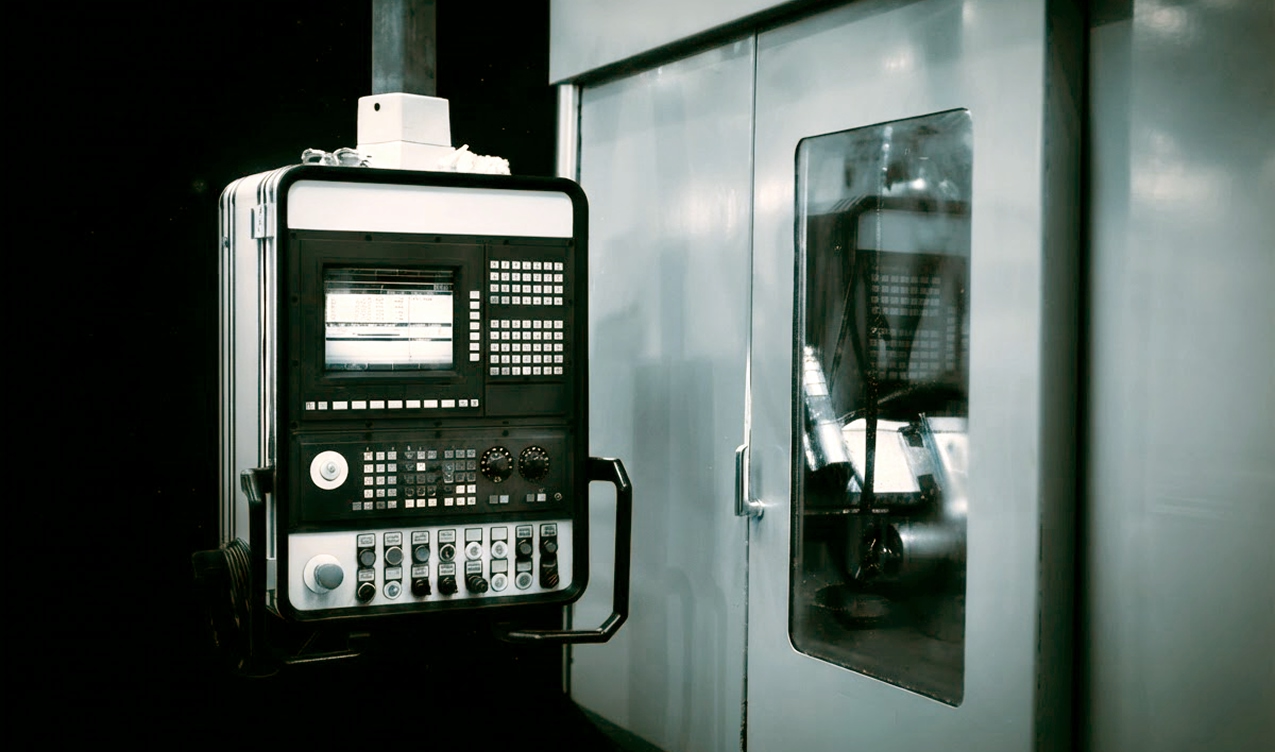
For some, it's simply an older model: a conventional lathe, a semiautomatic press, or manual equipment that relies on the operator to run it and log results by hand. The machine is reliable, even critical, but everything it knows stays with the person standing in front of it. These machines aren’t “data-ready” and were built before machine data collection or even before automation was standard for manufacturing companies.
For others, the machine arrived used, passed down from another factory, bought at auction, or moved over from a partner or parent company. It may run well, but its control system doesn't match the rest of your floor. Different protocols, engineering tools, access policies, and data structures increase integration effort. Documentation may be missing, the original OEM relationship is gone, and few people on-site know that particular system well enough to pull data from it safely. You can address some of this with skilled technicians and machine retrofits, but that path takes planning, time, and significant investment.
A third scenario is closed solutions: a turnkey project, built by an integrator or tech consultant, where the machines or production lines are locked down. These "packaged" solutions may run on a PLC, but access may be contractually or technically restricted by the OEM or original integrator. The PLC is there, but there's no open interface for data exchange, or you can only get in by paying license fees to the integrator. Every new machine or expansion means going back to that same integrator for another slow, costly project. Scaling up turns into an obstacle course.
What these machines share is that they still do their job well, but they are silent and can’t communicate with your team or your systems. From a monitoring standpoint, each one is a black box. That silence is what makes machine connectivity hard, and machines that are still productive are worth connecting.
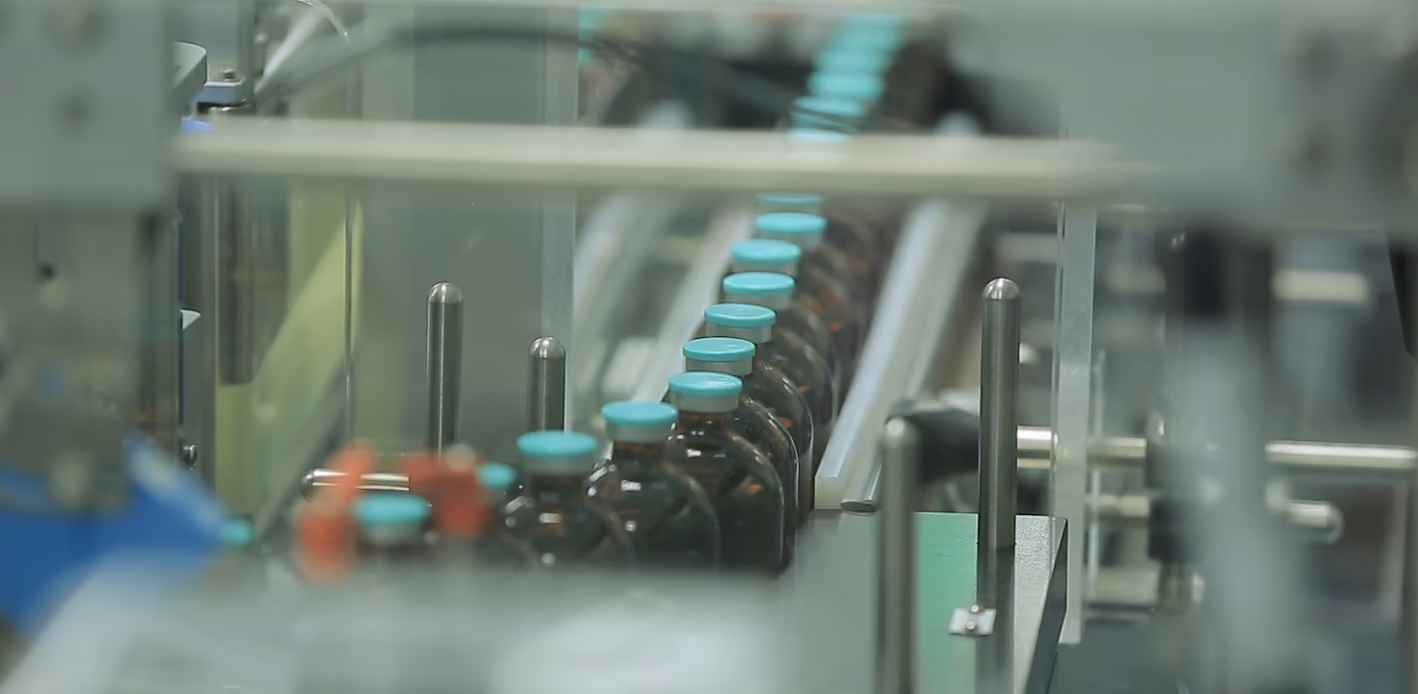
Machine connectivity: Main challenges
Understanding what makes a machine "legacy" is the first step. The harder part is the daily reality: plant managers and process engineers have to get these machines connected while production keeps running. Here's a breakdown of the connectivity challenges they run into most often.
Mixed shop floors: ages, types, and brands
Very few factories run the exact same type of machines. Most run a mix of ages, models, and OEMs. This is especially common in metalworking and food manufacturing, where a thirty-year-old machine can sit right next to one bought last year, and a single part may be cut, shaped, and polished across several different processes. Those machines often have different PLC types and different levels of data access, and that creates a challenge beyond the hardware itself. When each machine and process gets measured a different way, the metrics don't line up. One line reports cycles, another reports pieces produced, and a third is a legacy machine that isn't tracked at all. Comparing performance across the industrial plant becomes a lot harder than it should be.
Integration and machine retrofit costs
Connecting an old machine or a production line the traditional way can get expensive fast. According to PLC Simulator, hourly rates for mid- to senior-experienced systems integrators can go anywhere from $100 to $300 USD an hour, plus travel and expenses. SCADA systems and integration projects are good traditional methods for machine data collection. Still, they range from $10,000 to six-figure budgets and are slow to put in across a floor full of older machines. Because of the scale of this type of project, smaller or medium-size machines aren't always worth considering, or contractors may reject them beforehand. And for a smaller machine, a traditional integration can cost more than the machine is worth.
In addition, a machine retrofit or modernization project often takes months of work. Meanwhile, the pressure to run more efficiently and grow output doesn't wait. Plant managers need results in weeks, not quarters, but the cost and time of classic integration methods lack the agility to solve the need.
Management systems that can't talk to each other
Some companies have a degree of factory visibility, but only in fragments. The reason is usually related to managing different software and integration projects. Many manufacturers run a patchwork of tools: an in-house system that handles custom processes or workflows, a best-of-breed ERP, and maybe an MES on top. These were rarely designed to share data with each other. Any monitoring system you add has to be flexible enough to connect to all of them, or your team only ends up creating another data silo.
Moving data across the shop floor
When it comes to metrics and performance indicators, the challenge isn't only collecting the data or a machine retrofit, but processing and sharing it fast enough for your team to act on it. Many automated tools require a dedicated network to carry data. Physical infrastructure can be expensive to set up, and new digital technologies require additional setups to keep every process safe. Today, multiple options and offerings include the hardware or infrastructure to tackle this challenge, but they need to align with your machines and your company's IT capabilities.
Why factory visibility drives growth
Industrial productivity is a numbers game. It is tied directly to measuring what's working and what isn't, machine by machine and shift by shift. With real production metrics in hand and data collected from your machines, decisions rest on evidence instead of gut feel, and every process improvement starts from something you can actually measure.
More often than not, legacy machines are kept active because either they were an important investment or they provide value to your production that cannot be easily replaced. And that’s why they are essential to achieving true factory visibility. Every machine you connect, old or new, moves your manufacturing operation closer to a smart, connected environment. Legacy machines aren't a roadblock on that path. Connected the right way, they become building blocks of it.
What’s the best tool for real-time visibility without PLC integration?
The best tool for real-time visibility for your legacy machines is one that is flexible, non-invasive, and lets your team tackle productivity challenges gradually, without heavy upfront investment.
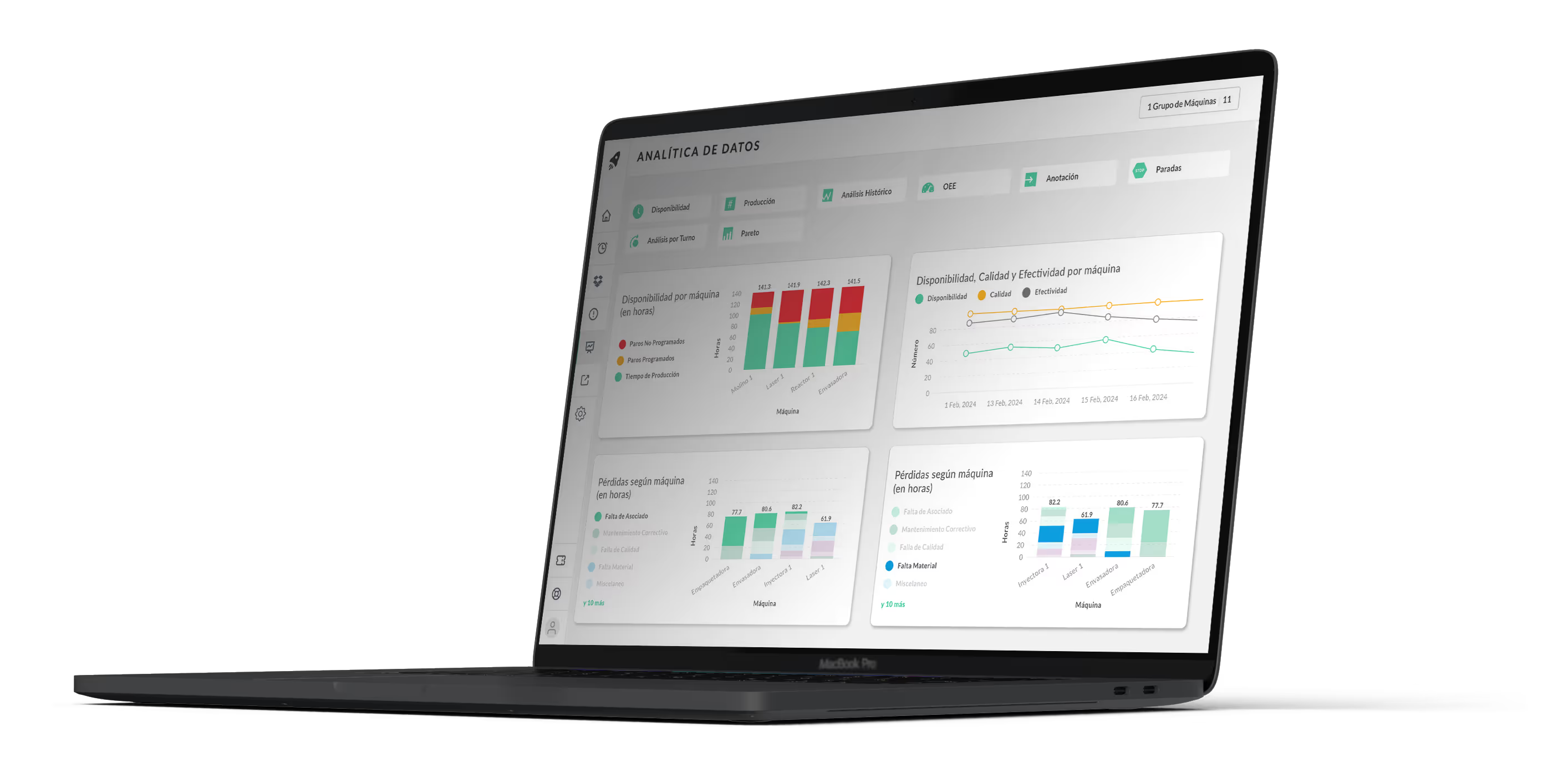
Many companies develop solutions for specific needs and issues but leave integration for later on, when efficiency and production goals are already hurt. Industry 4.0 solutions like Pulsar are built for exactly these challenges around machine connectivity and machine data collection. You don’t need to rip out and replace legacy machines with no PLC or invest upfront in new physical equipment. Instead, industrial sensors, relays, and adaptable data capture devices can enable a floor full of mixed and legacy machines to report in one platform. That means adding a data layer on top of what you already run and achieving connectivity without disrupting your current setup, powered by modern digital technologies.
Explore our platform

Overcoming the legacy no-PLC challenge: where to start with machine data collection
To reduce risks and ensure a path for digital transformation, the best way to start tracking OEE on machines without PLCs and modernizing your shop floor is with a phased, focused approach rather than a big-bang project. Here's a practical order.
Start with your critical machines
Identify the machines that are key to your production and processes. For example, those where downtime hurts the schedule the day it happens. Those are good candidates to see valuable results when improved and provide you with quick wins.
Focus on key metrics, don't drown in data
The most successful projects stay focused. Rather than collecting every available variable, they start with a clear question. What are you trying to achieve? Are you trying to modernize the shop floor to become more efficient, or is there a productivity challenge you are facing? Which metrics matter the most for you? Downtime or OEE on legacy machines? Track a small set of numbers tied to that goal, act on them, and expand the data you collect as your needs grow.
Choose a flexible, non-invasive solution like Pulsar
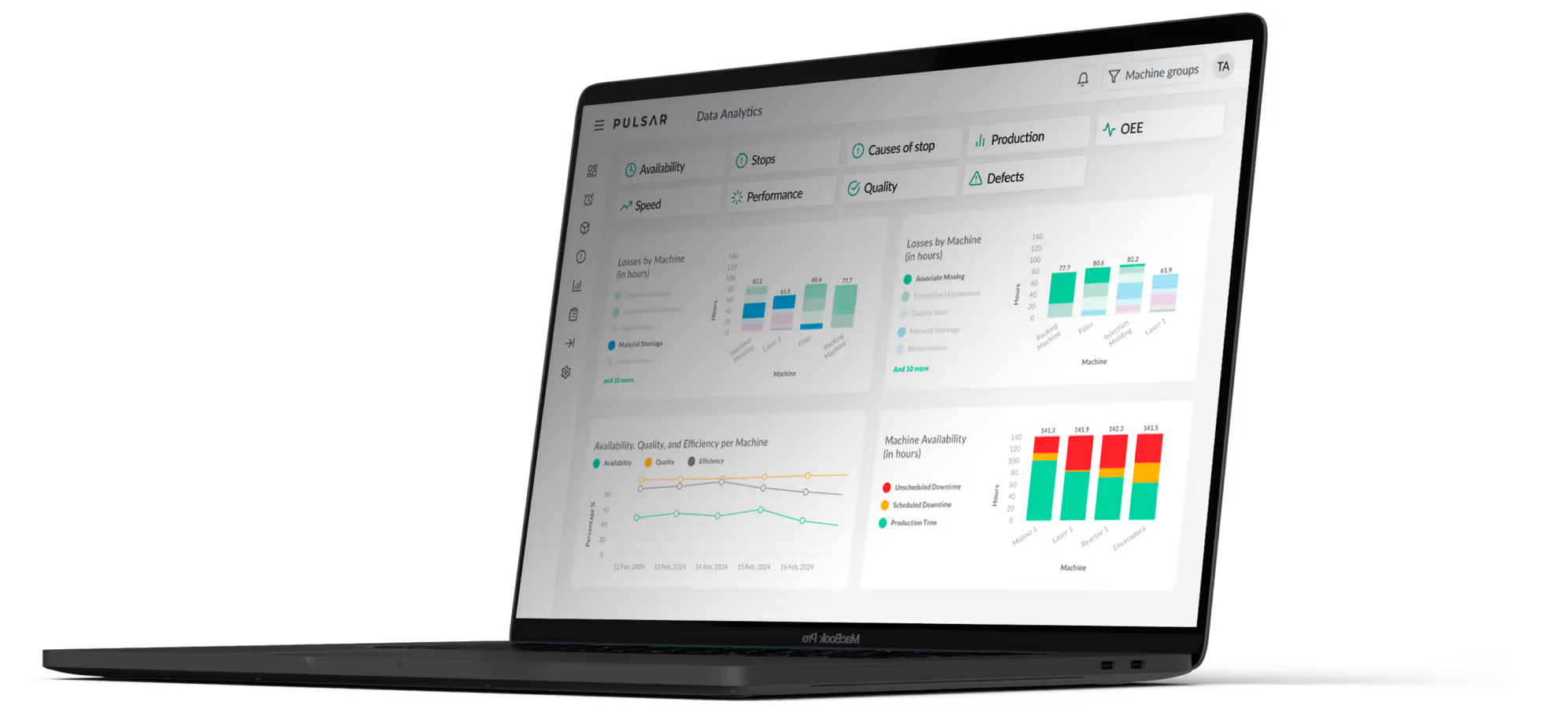
This is where the no-PLC challenge gets solved. Pulsar handles machine connectivity without tearing out your current setup, powered by adaptable hardware for automated machine data collection. It enables OEE on legacy machines without a PLC or without access, working alongside what you already run. Also important, it standardizes the data so old and new machines report the same way, and delivers real-time monitoring and advanced analytics on any machine, whatever its age or type. You get modern, Industry 4.0 monitoring as a complete solution, plus technical support and training so your team has support from day one.
Where legacy machines fit in a connected plant
If a legacy machine is still important to your production, it belongs at the forefront of factory visibility, not the back of the line. With Industry 4.0 technologies, your legacy machines aren't a black box anymore. Solid machine connectivity turns them into part of a connected shop floor that shows you exactly where to improve your industrial productivity. Start with a few critical machines, track the metrics that matter with Pulsar’s adaptable hardware and software, and build from there.
This article was developed with the valuable contribution of Samuel Valdez.
Related articles

Request a Custom Demo
See how Pulsar’s manufacturing intelligence platform can help your operations today.