Continuous Improvement in Manufacturing: Tools and Technology to Measure Results
Learn how to choose tools andtechnology that supports continuous improvement based on the problem you're solving, the KPIs you need, and how your team will review results. See which criteria to weigh to get reliable data, measure initiatives, and make better decisions.

Content
Choosing technology to support continuous improvement in an industrial plant doesn't start with a list of platforms. It starts with three questions. What problem do you need to solve? What information will help solve it? How will your team access the results?
A tool can offer plenty of KPIs, reports, and dashboards. That doesn't mean all of them matter for your operation. The right solution gives you reliable process data, lets you analyze it the way your factory needs, and shows whether your initiatives are delivering results.
This short guide walks through the steps to choose continuous improvement tools.
1. Define the problem and what you want to improve
Before comparing solutions for continuous improvement in manufacturing, narrow down the processes, machines, or losses your continuous improvement team wants to focus on. Choosing technology to reduce waste differs from choosing it to control machine stops on a line or redesign an entire process.
Start with a specific question: what do you want to understand or improve? Common goals include:
- Reduce downtime
- Detect speed losses
- OEE tracking and manufacturing efficiency improvement
- Increase parts produced
- Reduce defects and rework
- Compare performance across shifts
- Hit the production goals more consistently
- Measure the result of a process change
A clear problem keeps you from choosing a platform based on its feature count or how modern it looks. It also helps you set an initial scope and use cases close to daily operations. Many manufacturing companies start with one critical machine where losses concentrate, then expand monitoring as new needs come up.
Continuous improvement tools and technologies should support continuous improvement initiatives, not define them. Your team still owns analyzing the process, finding root causes, and making changes.
2. Identify the KPIs and data you need for process improvement
Once you've defined the opportunity area, figure out what information will help you understand it, analyze it in depth, and measure any improvement. To reduce downtime, for example, you'll need the number, frequency, duration, and classification of machine stops, among other data. If a line isn't hitting expected output, you'll need to review speed, cycle times, parts produced, and progress toward target.
KPIs that can support manufacturing process improvement include:
- OEE: gives a big-picture view of efficiency by combining availability, performance, and quality.
- Availability: shows how much time a machine was available to produce during planned production time.
- Planned and unplanned downtime: lets you analyze the number, duration, frequency, and classification of machine stops.
- Speed and cycle time: help you spot performance losses, longer-than-expected cycles, or variation in the operation.
- Production: compares parts produced against the target or plan.
- Quality: tracks defects, rejects, and parts that need rework.
You don't always need every metric. What matters is knowing which ones your team uses most and how they tie to your main goal and existing processes.
Also consider how much detail you need. An overall average can show that a loss exists, but not always where it comes from. That's why it pays to check how a tool lets you compare KPIs across different dimensions: by machine or line, shift, product, operator, and time period.
Data capture reliability matters too. When records depend entirely on operators updating notes or scanning codes, you can end up with gaps, inconsistent criteria, or data that arrives too late. Automatic data capture and monitoring give you more consistent data to set a baseline and compare later results.

3. Decide how you need to review data and results
Each team needs information presented to support its decisions. Before selecting a platform, process managers, process engineers, and continuous improvement leads should consider how they'll review the data and what action it supports: quick checks, ongoing monitoring, or in-depth analysis.
Real-time dashboards help when your team needs to see a machine's status, check progress against target, or respond to a machine stop or inefficiency during the shift.
Historical reports let you compare periods, spot trends, and dig into inefficiencies or bottlenecks. They also help you compare performance before and after a continuous improvement action.
Filters and comparisons let you go deeper into the data. For example, a drop in average OEE or efficiency can have different explanations when you break it down by shift, machine, or product. Filters also help you compare performance over time and track how a KPI evolves.
Alerts keep people informed when a relevant event happens, such as a machine stop or a specific inefficiency like a speed loss. Their main value isn't analysis. They help teams take corrective action and respond faster. To be useful, alerts should be set up by event type and reach the people responsible for handling them.
So when you evaluate a solution, look beyond the data it collects. Check whether it turns that data into dashboards, historical reports, alerts, and summaries your team can easily access and use.
4. Check whether the technology fits your factory
Once you've defined the problem, the KPIs, and how you'll review the information, you can compare available solutions against more concrete criteria.
Check whether the technology:
- Pulls data from the machines you already use
- Works with machines of different brands, models, and generations
- Lets you start with a specific scope and grow later
- Offers KPIs you can set up around your operation's needs
- Makes data easy to check from the shop floor and remotely
- Connects with other systems when needed
- Includes training, support, and guidance during adoption
Implementation matters as well. A platform that's hard to adopt, or that requires slow and costly machine integration, may not be the best fit when your goal is short-term results from continuous improvement actions. The right technology fits into your operation without adding unnecessary complexity.
Continuous improvement in manufacturing: How does Pulsar support your processes?
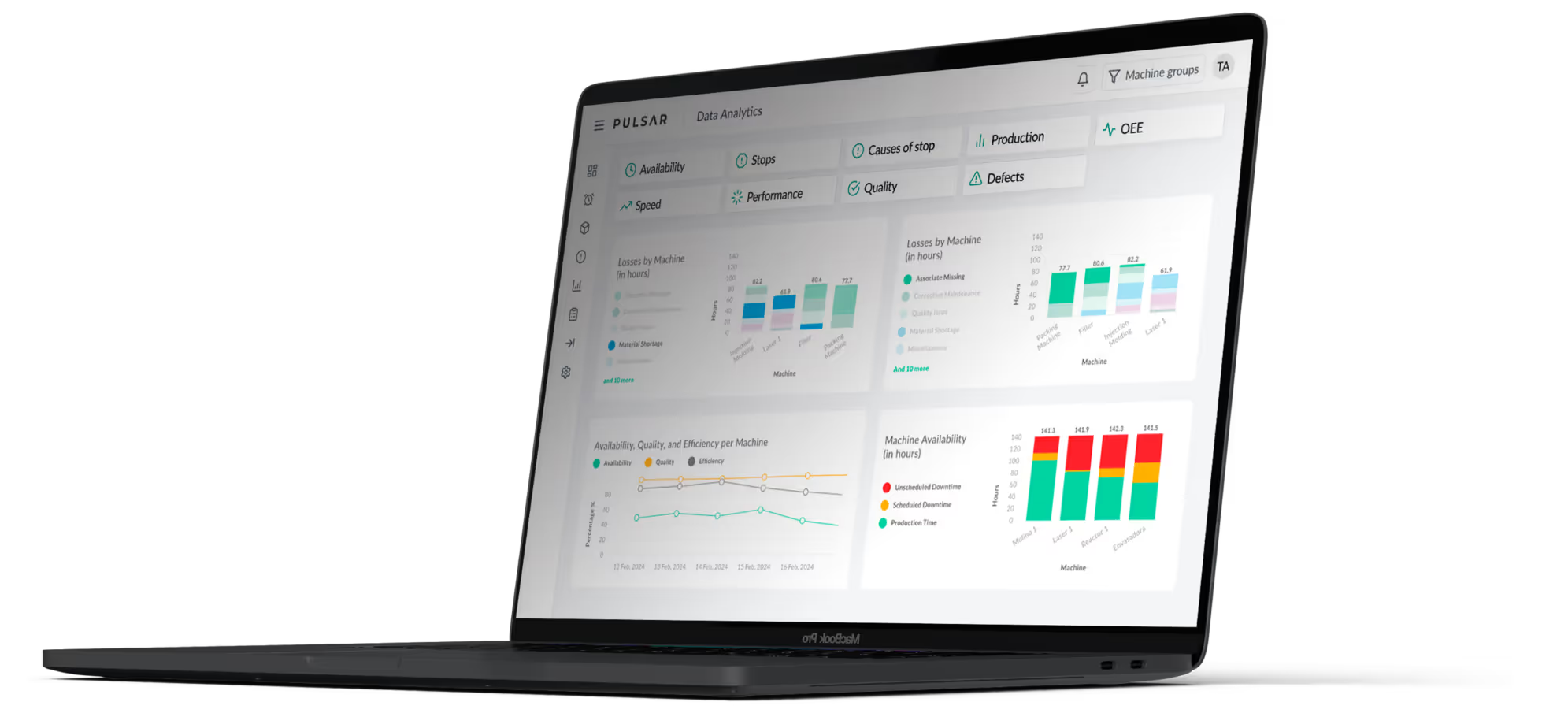
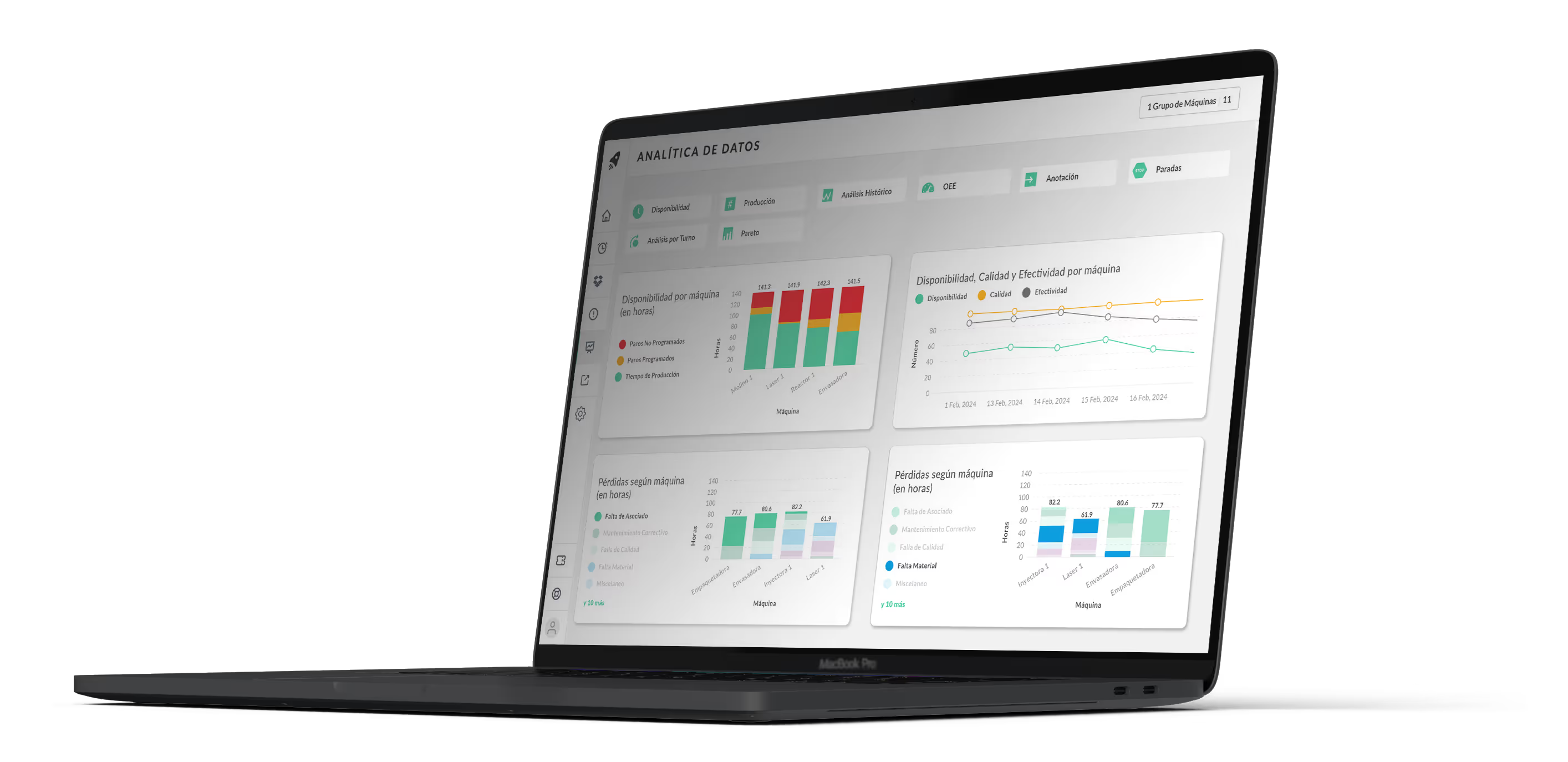
Pulsar monitors key KPIs such as OEE, production, availability, speed, cycles, planned and unplanned downtime, quality, and more. The platform's dashboards, automated historical reports, and alerts help you see how machines and lines behave, analyze where to improve, and track the results of your initiatives.
Leveraging industrial data capture devices and sensors, Pulsar collects data from both modern and legacy machines without relying on their PLCs. It also works alongside other systems in your factory and connects through APIs.
If you're looking for technology that gives you more visibility into your operation and measures your continuous improvement initiatives, schedule a demo.
Explore our platform
Frequently asked questions
How do you choose between continuous improvement tools?
The right continuous improvement tool depends on your challenges and goals. Look for a tool that delivers accurate data and up-to-date KPIs. It should connect with machines of different types and ages, support in-depth analysis and comparisons over time, and be easy enough to use that it becomes part of your daily processes.
When is kaizen the right approach?
Kaizen projects work well when your industrial plant wants to make steady, incremental improvements with team involvement. You can apply kaizen to specific, measurable losses such as recurring machine stops, bottlenecks, long cycles, or production waste. Manufacturing efficiency improvement relies heavily on these types of efforts and programs.
Which KPIs can support manufacturing process improvement?
The most useful KPIs include OEE, availability, performance, quality, production volume, speed, and cycle time, along with the number, frequency, and duration of machine stops. Depending on the focus of the improvement (process, communication, space, workflow, or automation), many other metrics can help you measure results. What matters most is having a tool that collects accurate data so you can compare results later.
What features should a continuous improvement platform have?
It should deliver accurate KPI data, historical reports with comparisons, and dynamic dashboards. Real-time monitoring and alerts you can set up can also be valuable. A modern system should work with your existing machines, be easy to use and adopt, and connect with the other systems in your factory.
Related articles
Request a Custom Demo
See how Pulsar’s manufacturing intelligence platform can help your operations today.